Medieval survival farming was never about luxury. It was about balance — between humans, animals, land, and time. A charming medieval farm and stable setup feels alive because every block, structure, and path serves a purpose. When designed thoughtfully, these farms don’t just function; they tell a story of hard work, seasons, and quiet rural beauty.
In survival gameplay, medieval farms shine because they blend practicality with atmosphere. Weathered wood, stone foundations, hay storage, animal pens, and uneven terrain all contribute to an authentic world that feels earned rather than placed. Below are ten deeply immersive medieval farm and stable ideas that focus on realism, survival efficiency, and Pinterest-worthy charm.
1. Hillside Medieval Farmstead with Integrated Stables
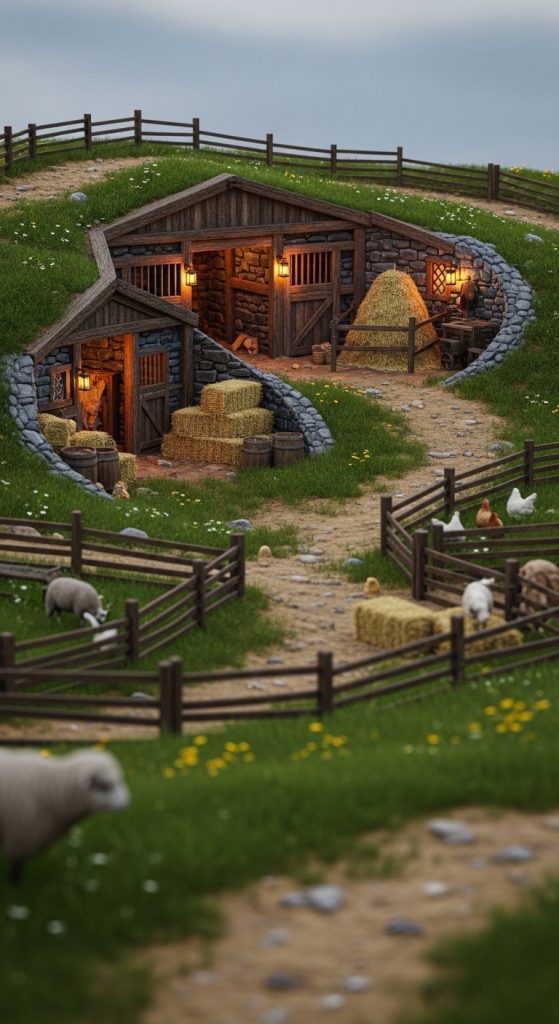
A hillside farmstead instantly feels medieval because elevation was used for drainage, defense, and land efficiency. This design places the farmhouse at the upper level while the stables sit slightly lower, built into the slope. Stone retaining walls support wooden barns, while dirt paths naturally curve downhill.
The stables are half-embedded into the hill, using stone backs and timber fronts. This not only saves materials but protects animals from harsh weather. Hay bales stack neatly under wooden overhangs, and small fenced paddocks extend outward following the land’s shape.
Crops grow in uneven terraces nearby — wheat, carrots, and barley-style fields separated by stone steps. Lanterns hang from wooden beams, creating a warm glow at night. Everything feels organic, as if the farm expanded slowly over generations.
2. Timber-Framed Courtyard Farm with Central Stable
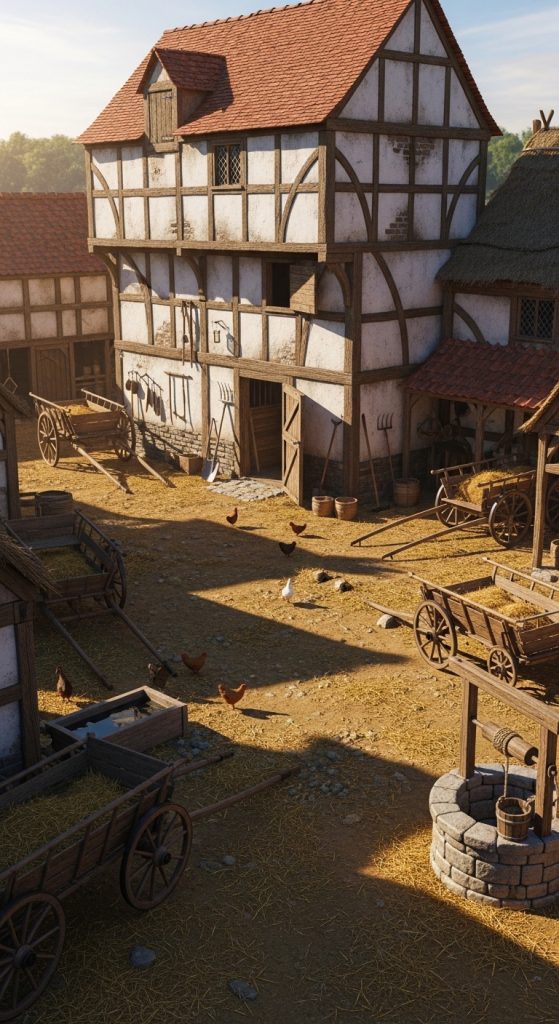
This idea revolves around a square or rectangular courtyard, enclosed by timber-framed buildings with white plaster and dark wooden beams. The stable occupies one side of the courtyard, allowing animals to be kept close and secure.
The central courtyard remains open, filled with packed dirt, wagons, water troughs, and scattered hay. Chickens roam freely while larger animals remain behind wooden fences. Each structure has a slightly uneven roofline, using thatch or dark oak slabs for realism.
Storage rooms, grain sheds, and sleeping quarters surround the space, creating a compact and efficient survival layout. This design works especially well in early-to-mid survival because everything is within reach and protected from mobs.
3. Riverside Medieval Farm with Open Grazing Pens
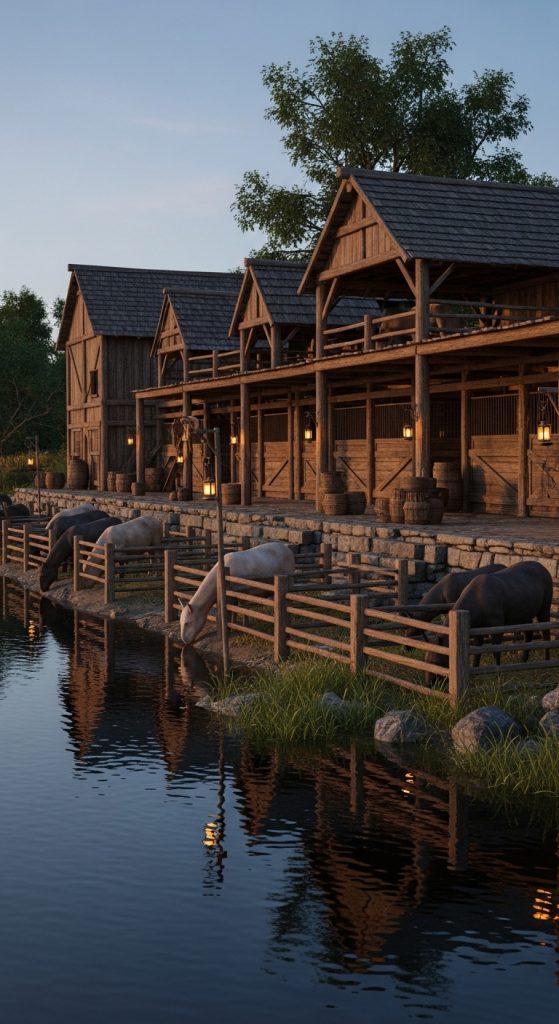
Medieval farms thrived near water. A riverside setup allows natural irrigation, fishing access, and scenic beauty. This design places long grazing pens parallel to the riverbank, fenced with rough wooden posts and gates.
The stable itself is a long, low structure with stone footings and timber walls, designed to keep animals dry during floods. Slanted roofs extend outward, providing shaded feeding areas. Small docks and washing platforms sit near the water’s edge.
Crop fields stretch inland, separated by dirt paths and shallow irrigation trenches. Reeds, bushes, and wild grass grow naturally, making the entire area feel untouched and authentic. The river reflects lantern light at night, adding cinematic charm.
4. Walled Medieval Farmstead for Survival Protection
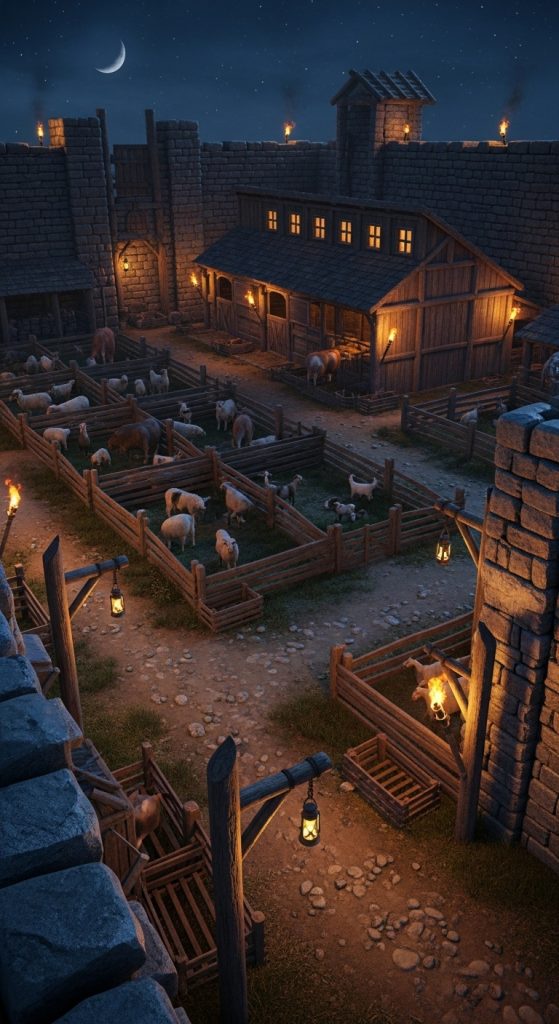
In dangerous biomes or hardcore survival, farms often needed protection. This idea uses low stone walls to enclose the entire farm and stable area, offering safety without feeling fortress-like.
Inside the walls, animal pens are arranged in clusters. Cows and sheep occupy larger fenced areas, while pigs and chickens stay closer to the farmhouse. The main stable is built from stone and oak, with narrow windows and heavy wooden doors.
Watch posts with lanterns sit at corners of the wall. Dirt paths connect everything organically, worn down from imagined foot traffic. This farm feels lived-in, defensive, and historically believable — perfect for long-term survival worlds.
5. Medieval Village-Style Farm with Shared Stables
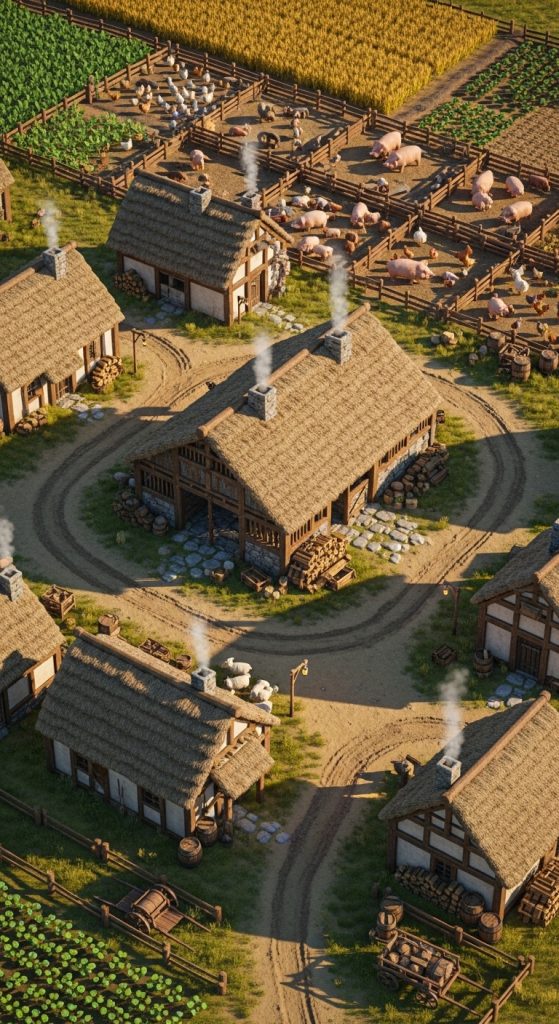
Instead of a single owner, this farm represents a small medieval community. Several modest houses surround a shared stable and barn area. Each building looks slightly different, using varied wood tones, roof heights, and materials.
The shared stable is large and divided internally with wooden stalls. Hay storage occupies the loft above, accessed by ladders or exterior ramps. Outside, communal pens allow villagers to tend animals together.
Fields extend outward in strips, mimicking medieval open-field farming. Dirt roads connect homes to the stable, and barrels, carts, and tool racks add realism. This design shines in multiplayer survival or roleplay worlds.
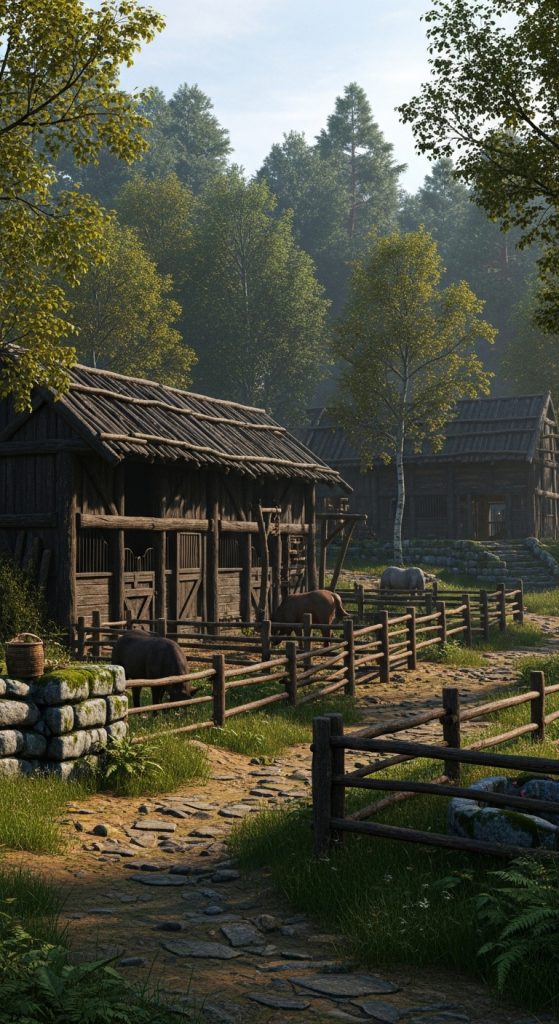
6. Forest Edge Medieval Farm with Rustic Stables
Farms built near forests feel cozy and secluded. This design places stables at the forest’s edge, built from darker wood types like spruce or dark oak, blending seamlessly with surrounding trees.
The stable roofs are steep to shed snow and rain, while stone foundations prevent decay. Animals graze in partially wooded pens, with trees providing natural shade. Wooden feeding troughs and rough fencing keep everything rustic.
Crop plots are smaller and scattered, carved out of forest clearings. Mossy stone, leaf piles, and overgrown paths enhance the sense of age. This farm feels quiet, atmospheric, and deeply immersive.
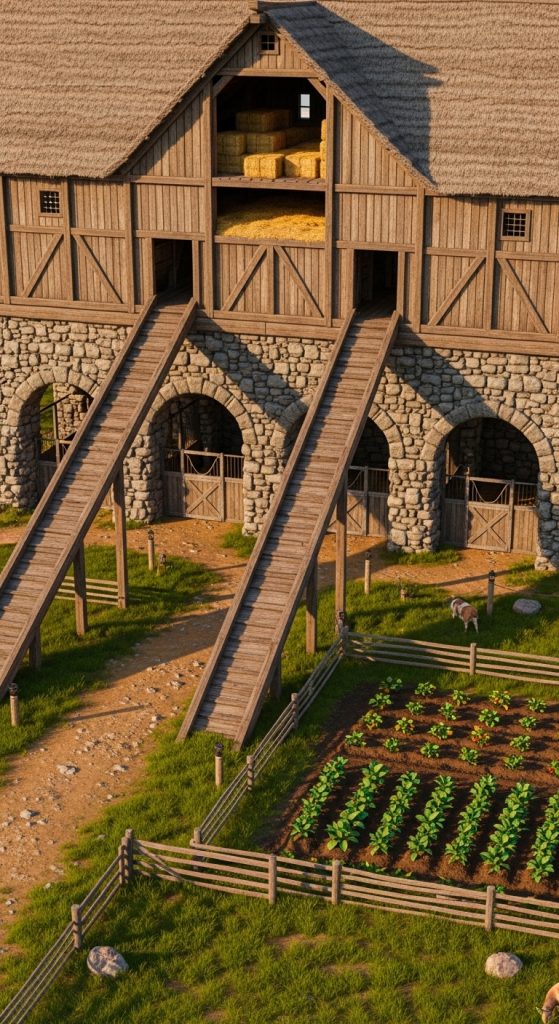
7. Medieval Farmland with Raised Barn and Under-Stables
This clever survival-friendly design uses vertical space. A large barn sits elevated on stone pillars, with stables built underneath. The upper level stores grain and hay safely away from mobs, while animals remain sheltered below.
Wooden ramps lead carts up to the barn doors. The stables below use stone walls for durability, with wooden dividers for each animal. Lanterns hang low, creating dramatic lighting at night.
Surrounding fields are neatly arranged, bordered by low fences and scarecrow-style decorations. This design feels smart, efficient, and historically inspired by real medieval granaries.
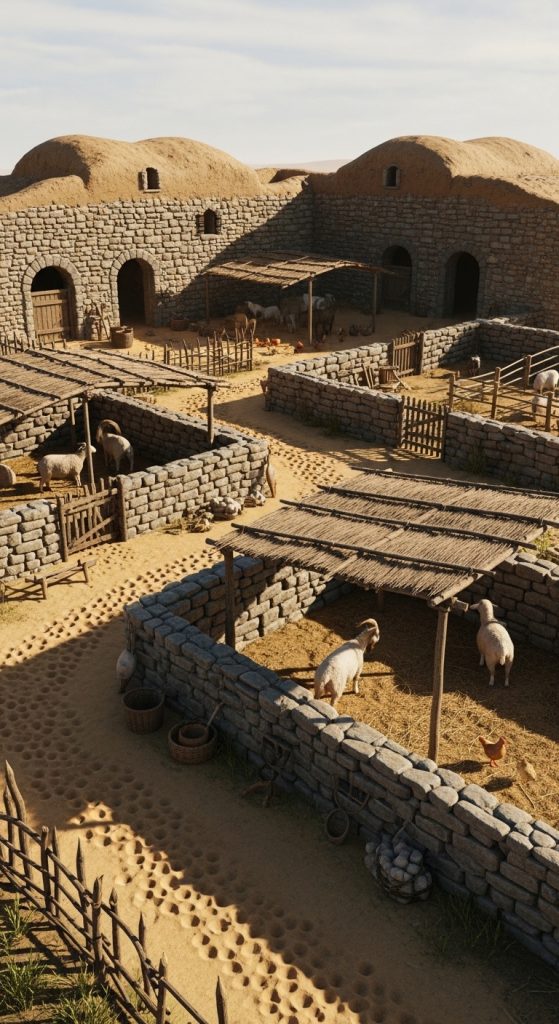
8. Mudbrick and Stone Medieval Farm in Dry Biomes
Not all medieval farms were green. In dry or plains biomes, farms used mudbrick, stone, and light wood to survive harsh conditions. This design uses sandy paths, stone troughs, and shaded animal pens.
Stables are compact, with thick walls and small openings to keep interiors cool. Hay is stored under covered porches, and animals graze in open pens with minimal fencing.
Crop farming relies on carefully placed water channels. Clay pots, barrels, and rough textures give the farm a grounded, survival-focused look that still feels elegant and Pinterest-ready.
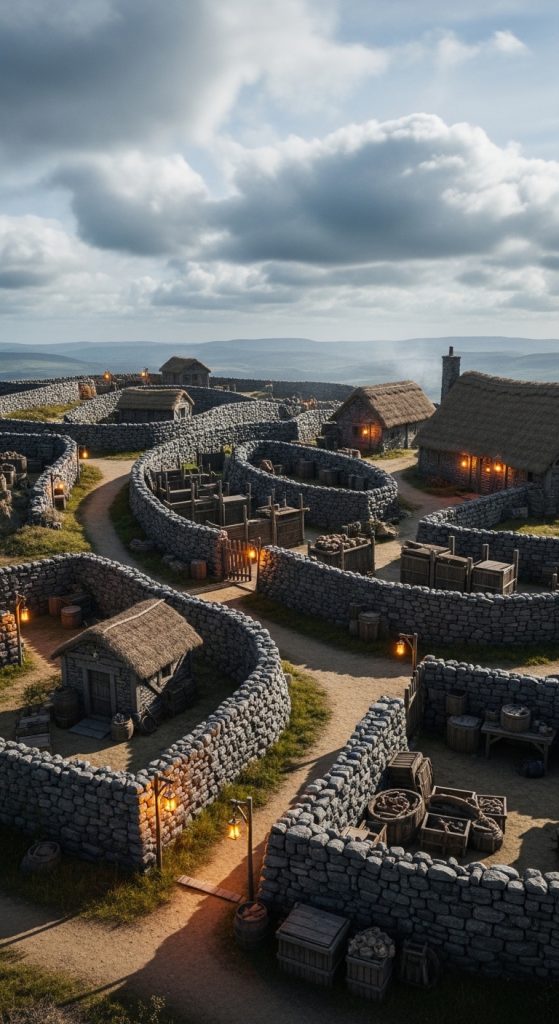
9. Medieval Hilltop Farm with Windbreak Stables
On exposed terrain, protection from wind was vital. This hilltop farm uses thick stone walls on the windward side of stables, while the opposite side remains open with wooden fencing.
The stable layout curves slightly, following the hill’s shape. Hay bales stack against stone walls, acting as insulation. Lantern posts line the paths, preventing mob spawns while enhancing atmosphere.
Fields lie slightly downhill, sheltered naturally by the terrain. This design feels rugged, realistic, and perfect for dramatic landscapes.
10. Fully Developed Medieval Estate Farm and Stables
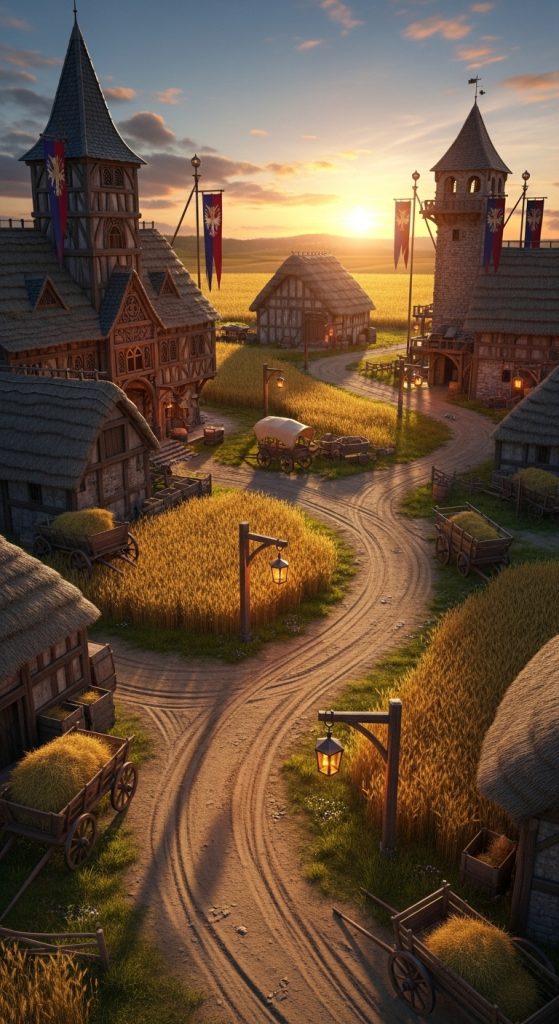
This final idea represents a mature survival world. A large estate includes multiple barns, stables, storage sheds, and expansive farmland. Everything is connected by winding dirt roads and stone paths.
The main stable is grand yet practical, with tall timber frames, stone bases, and a hay loft above. Animal pens are spacious and well-organized. Decorative elements like banners, carts, wells, and gardens elevate the aesthetic.
This farm tells a story of progression — from survival beginnings to medieval prosperity — making it ideal for showcase builds and Pinterest inspiration.