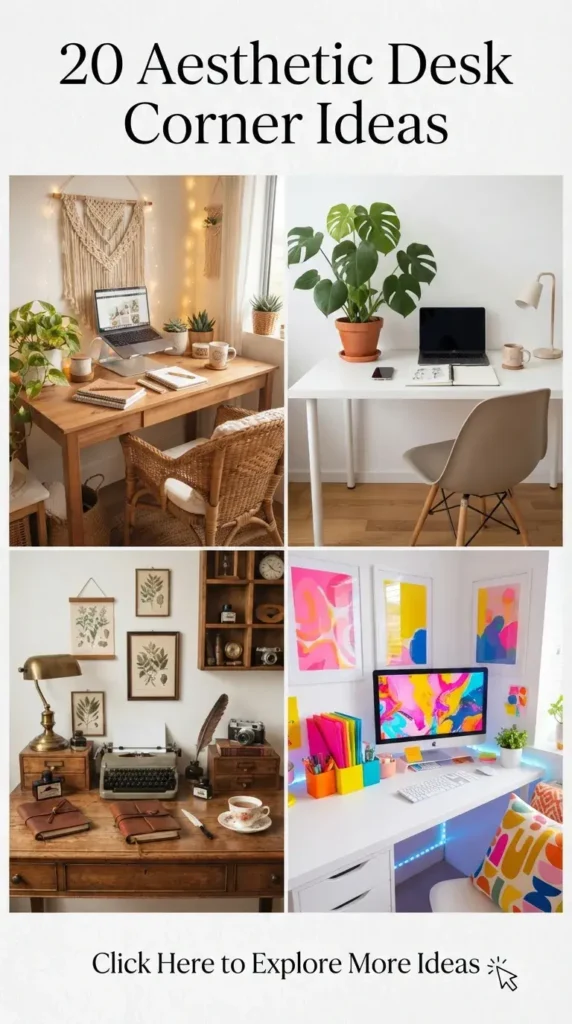
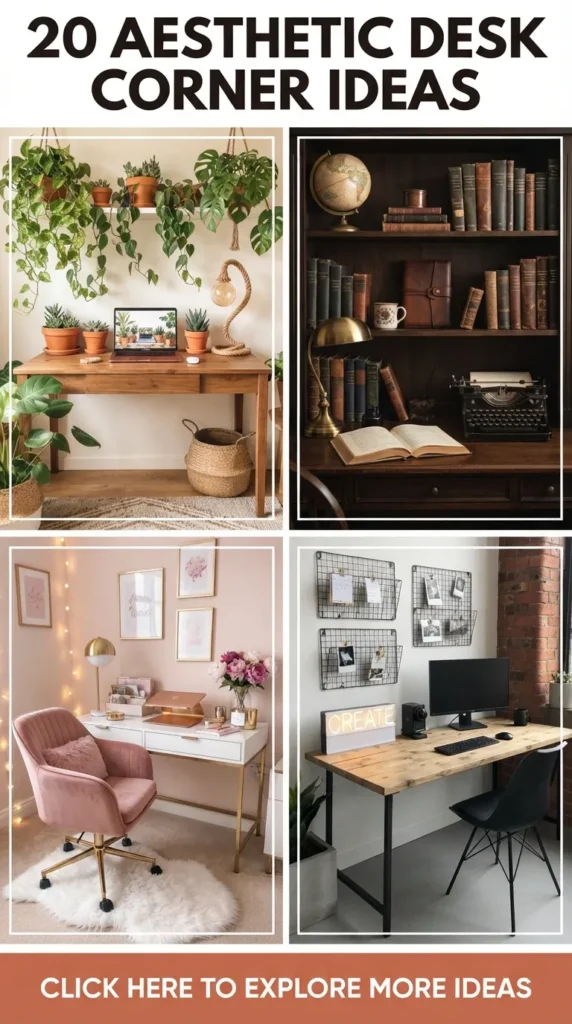
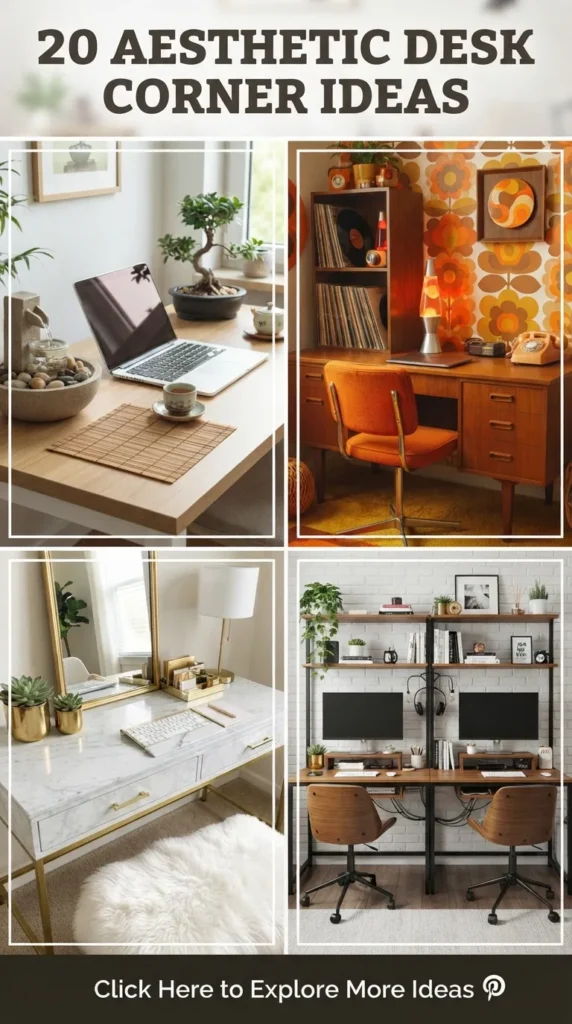
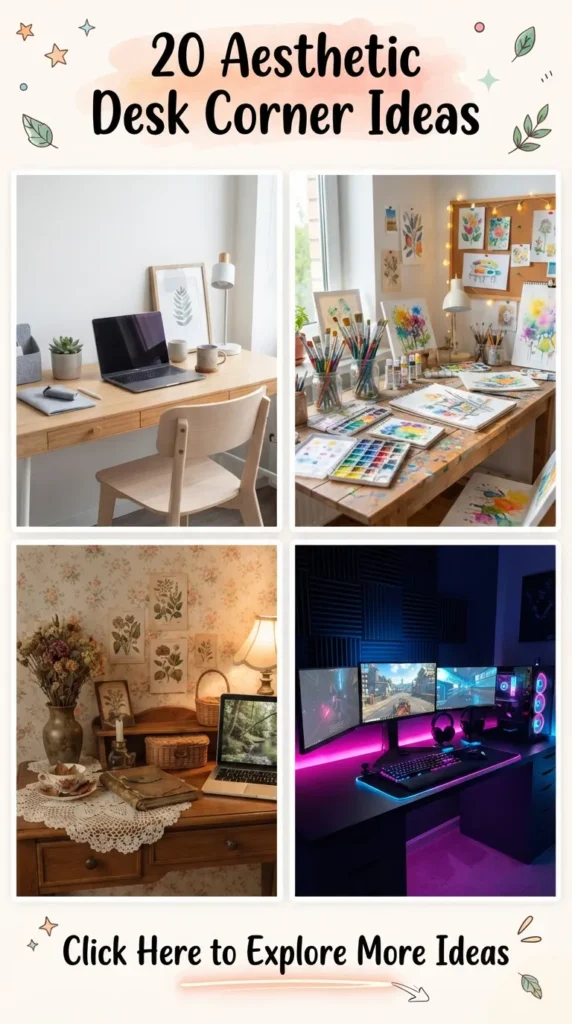
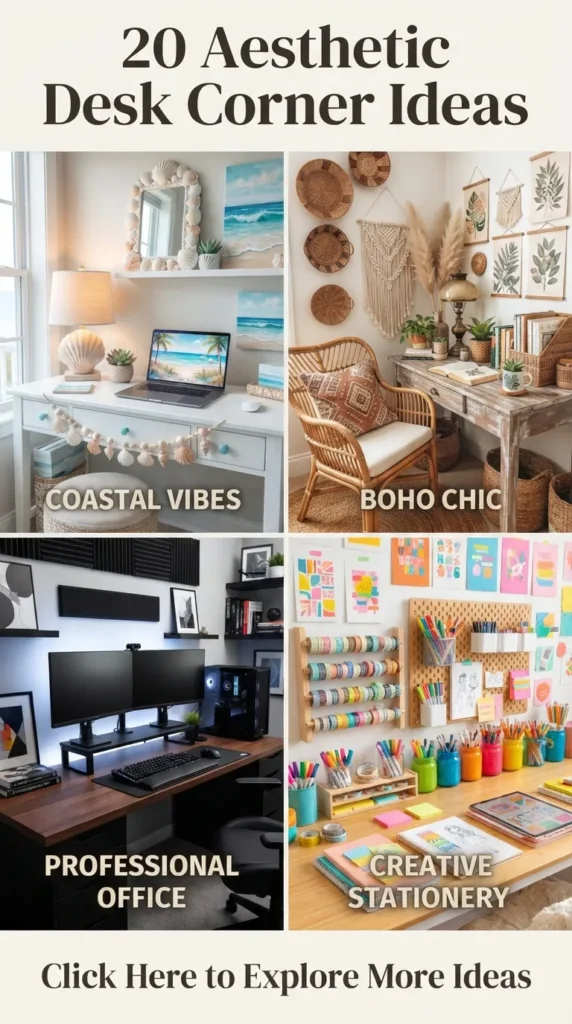
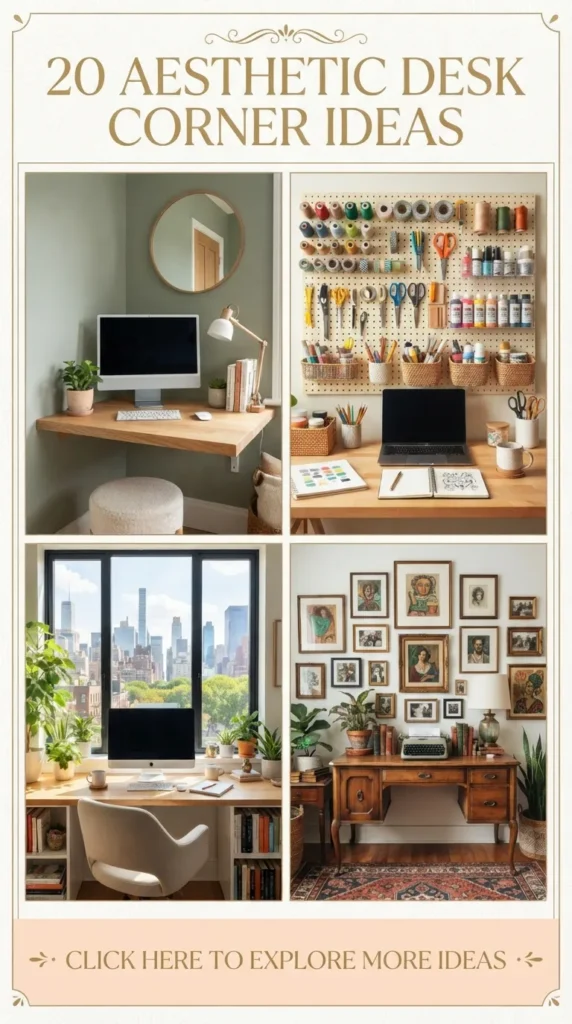
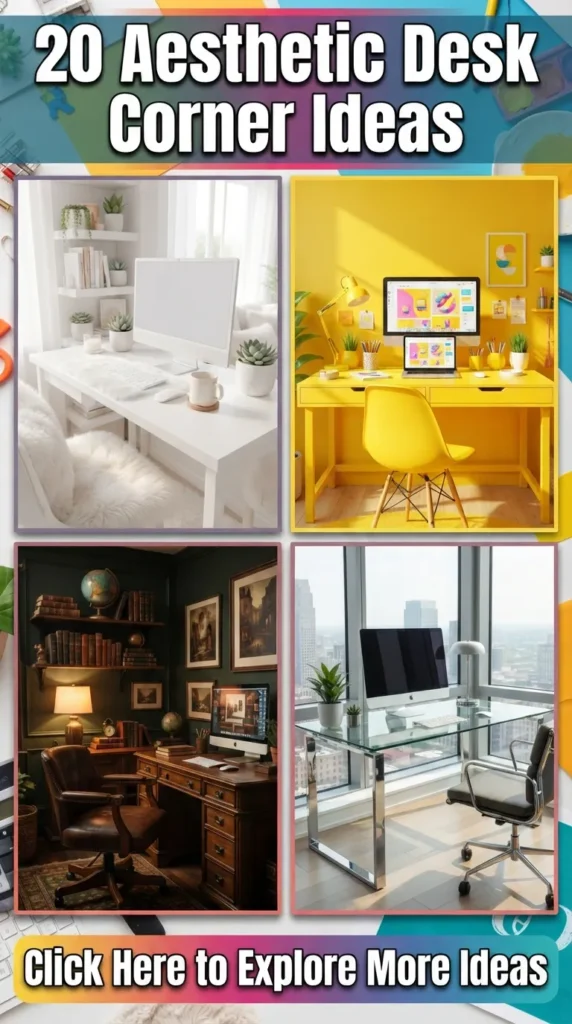
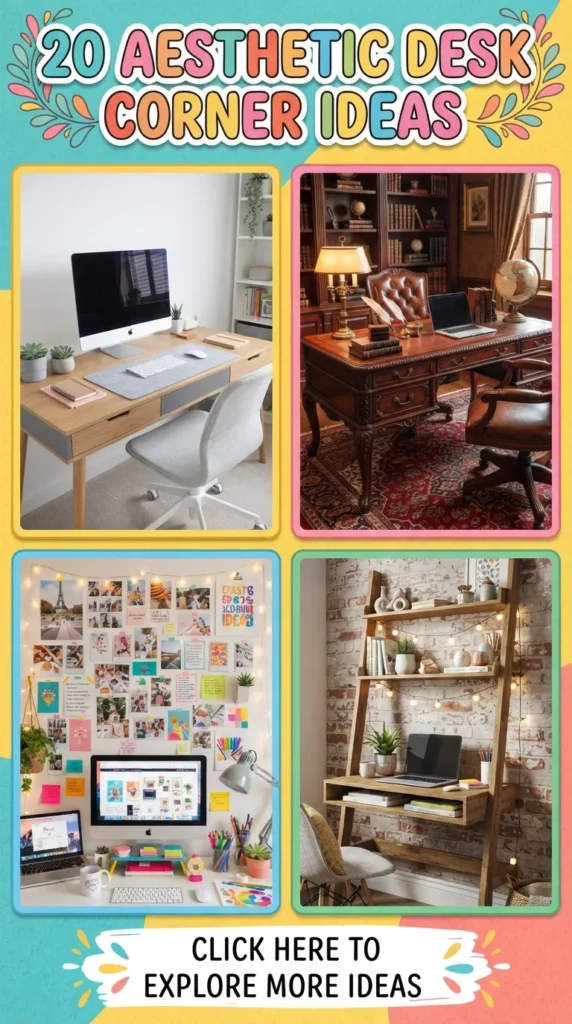
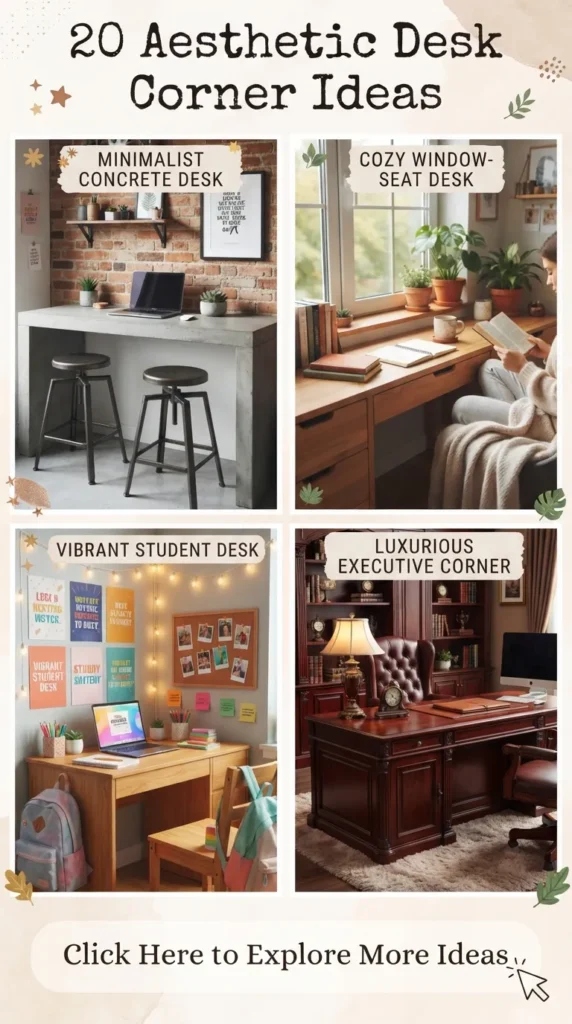
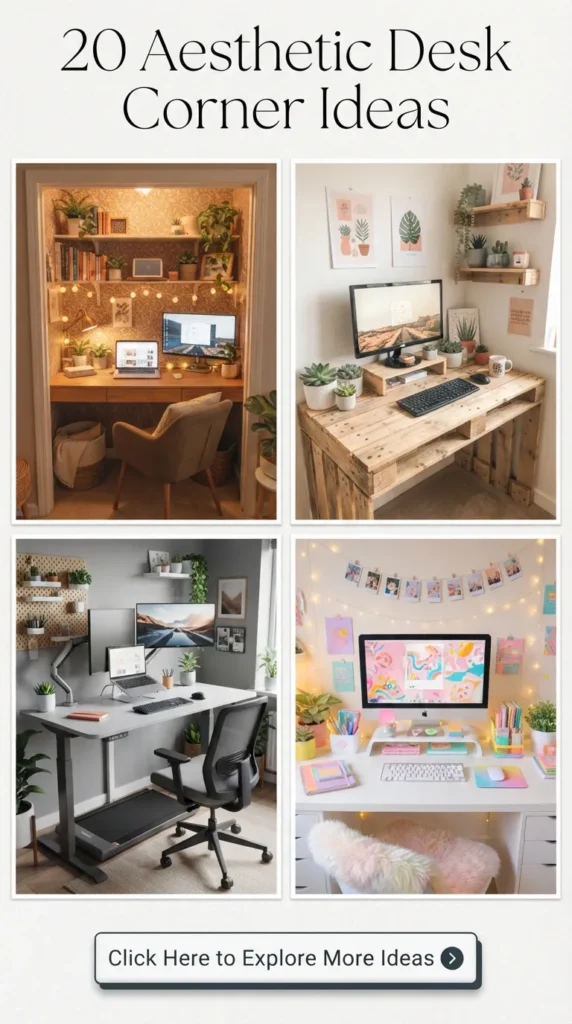
Creating a workspace that balances intense productivity with calm, personal aesthetics is one of the most rewarding home upgrades you can make. A desk corner does not require an entire spare room; an underutilized nook in a bedroom, an awkward alcove beside a wardrobe, or a quiet sunlit corner by a window can effortlessly transform into a functional sanctuary.
Designing an aesthetic desk corner is about curating textures, managing warm lighting, and using vertical space efficiently. Below is a comprehensive, practical guide to 20 distinct aesthetic desk corner concepts, detailing what each style represents, how to build it from scratch, helpful styling tips, creative variations, and everything required to assemble it.
1. Japandi Minimalist Nook
Introduction
The Japandi aesthetic blends the clean, functional lines of Scandinavian design with the warm, organic wabi-sabi philosophy of Japanese interiors. This desk corner relies on natural materials, low-clutter surfaces, muted neutral tones, and intentional craftsmanship.
What This Idea Means
A Japandi corner is a sanctuary of calm. It strips away digital chaos and plastic peripherals in favor of raw light woods, paper lanterns, matte ceramics, and balanced negative space.
How to Make It
- Anchor the corner with a pale oak, ash, or birch writing desk with clean, unadorned legs.
- Mount a floating natural wood shelf 18 inches above the monitor or laptop screen.
- Install a soft, warm-toned washi paper pendant light directly overhead or place an Akari-style lantern lamp in the corner.
- Introduce a textured linen desk mat in beige or soft cream.
- Use a single ceramic vase holding a dried branch, such as cotton blossom or pampas grass, to create asymmetrical visual balance.
Tips and Variations
- Tips: Hide every visible cable using under-desk raceways. Japandi depends on visual simplicity; clutter instantly breaks the illusion.
- Variations: Swap light birch for smoked oak or walnut if your room receives abundant natural sunlight and can support deeper contrast.
Materials Needed
- Solid oak or ash desk
- Linen or wool felt desk pad
- Japanese paper lantern desk lamp (2700K warm bulb)
- Matte ceramic mug or pen holder
- Under-desk cable management tray

2. Cottagecore Botanical Corner
Introduction
The Cottagecore desk corner is a romantic, nature-infused setup that feels like an artist’s cottage in the countryside. It celebrates natural greenery, vintage wood finishes, botanical prints, and soft ambient textures.
What This Idea Means
This concept brings the outdoors inside, prioritizing leafy foliage, aged paper, pressed flowers, and vintage wooden elements to build a cozy, grounded, and slow-living atmosphere.
How to Make It
- Place a vintage or upcycled dark pine writing desk neatly into the room corner.
- Mount two rustic reclaimed wood floating shelves on the adjacent walls.
- Line the shelves with trailing houseplants, such as Devil’s Ivy, String of Pearls, and Philodendron, letting the vines drape toward the desk.
- Frame vintage botanical field illustrations in distressed bronze or antiqued gold frames and create a mini gallery wall.
- Add an amber glass desk lamp with an exposed Edison bulb for a golden, nostalgic glow.
Tips and Variations
- Tips: Group plants in odd numbers (3, 5, or 7) across shelves to achieve organic, effortless placement.
- Variations: Incorporate a corkboard covered in calico linen to pin dried herbs, seed packets, and handwritten notes.
Materials Needed
- Reclaimed pine or walnut desk
- Trailing indoor plants (Pothos, English Ivy)
- Antiqued brass or bronze picture frames
- Amber glass Edison bulb table lamp
- Terracotta plant pots and saucers

3. Dark Academia Scholar’s Alcove
Introduction
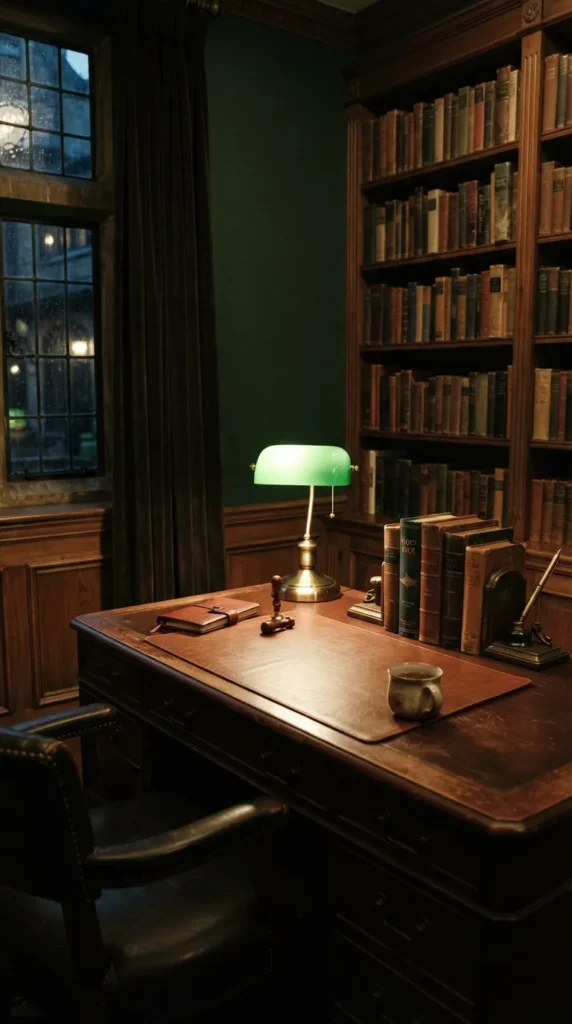
Rich, moody, and deeply intellectual, the Dark Academia desk corner is tailored for readers, writers, and thinkers. It emphasizes dark wood tones, leather accents, classic literature, and dramatic shadow play.
What This Idea Means
This style evokes historic university libraries, classic European studies, and timeless architecture. It uses deep hues like espresso, forest green, burgundy, and antique brass.
How to Make It
- Use an espresso-stained or dark mahogany desk positioned flush against the corner walls.
- Install a brass banker’s lamp with an emerald green glass shade as the primary task light.
- Stack hardbound classic books horizontally and vertically on a corner shelf, using ornate metal bookends.
- Hang framed classical art prints, star maps, or architectural sketches in heavy dark wood frames.
- Place a full-grain leather desk pad and a brass fountain pen stand on the writing surface.
Tips and Variations
- Tips: Paint the corner walls in a rich matte charcoal, deep navy, or forest green to enhance the moody atmosphere.
- Variations: Add a small hourglass, a wax seal kit, and vintage globes for added historic character.
Materials Needed
- Dark stained mahogany or walnut desk
- Emerald green and brass banker’s lamp
- Hardcover vintage books
- Full-grain leather blotter
- Antiqued brass stationery accessories
4. Modern Industrial Loft Corner
Introduction
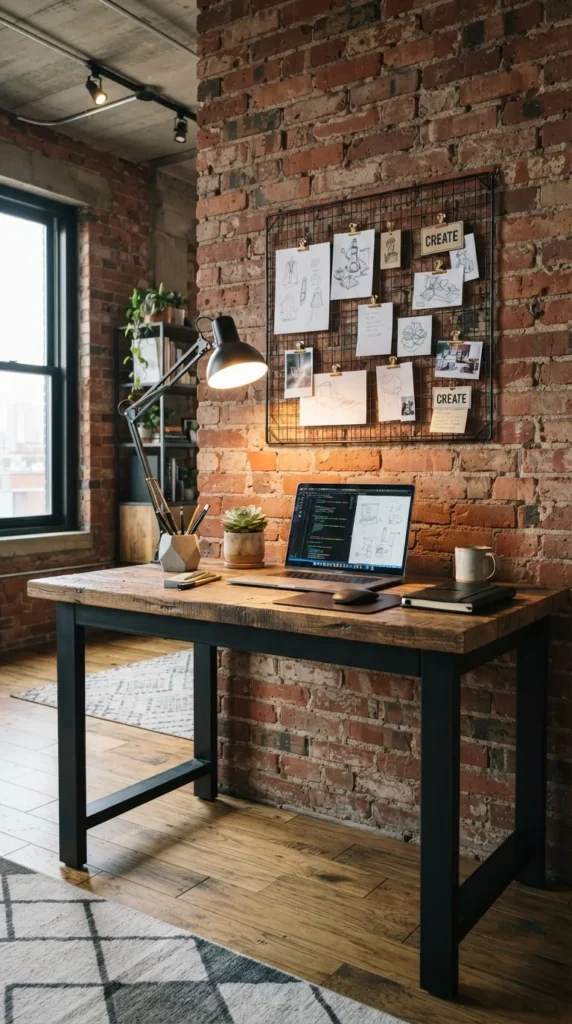
The Modern Industrial desk corner combines utilitarian strength with sleek urban architecture. It pairs raw metal framing, reclaimed timber, exposed brick, and clean functional task lighting.
What This Idea Means
This aesthetic celebrates raw structural materials, prioritizing durability, clean organization, and architectural clarity without unnecessary ornamentation.
How to Make It
- Choose an L-shaped or straight corner desk constructed with a matte black steel frame and a thick reclaimed wood top.
- Mount a black wire mesh grid board on the primary wall for hanging tools, notes, and headphones using S-hooks.
- Install an articulated black metal architect arm clamp lamp to focus directional light where needed.
- Use matte black metal wire baskets for file organization and cable management.
- Add a concrete planter housing a sturdy succulent or snake plant.
Tips and Variations
- Tips: Keep metal finishes consistent; match matte black accents throughout the space.
- Variations: If you do not have exposed brick, use removable textured concrete wallpaper behind the desk to add industrial depth.
Materials Needed
- Reclaimed timber desk with steel legs
- Matte black metal wire memo board
- Articulated metal clamp desk lamp
- Cast concrete pencil cup and planter
- Black wire cable organizer basket
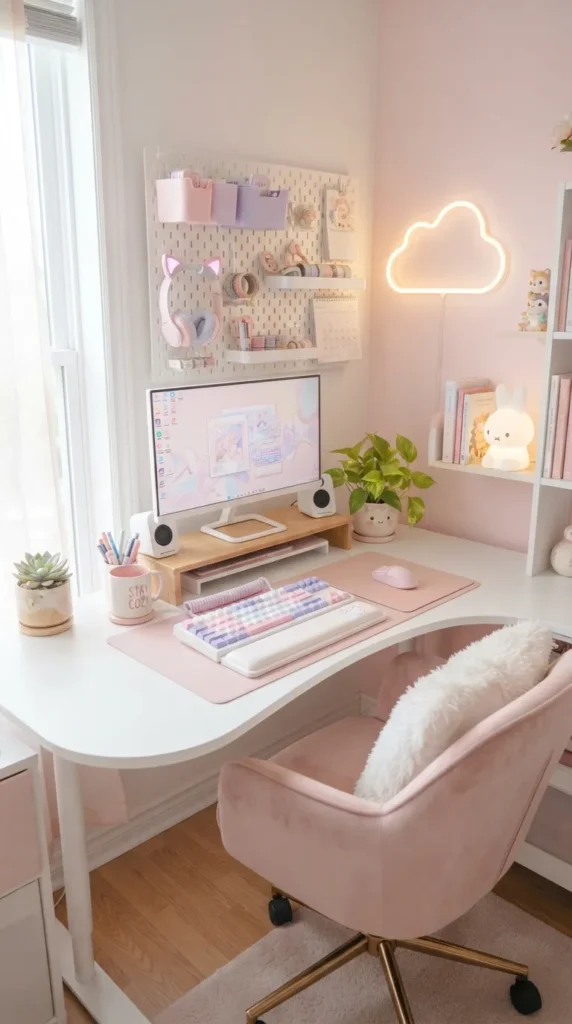
5. Soft Pastel Kawaii Sanctuary
Introduction
Bright, playful, and cheerful, the Soft Pastel Kawaii corner uses baby pinks, soft lilacs, mint greens, and rounded furniture edges to create an uplifting, gentle workspace.
What This Idea Means
This aesthetic emphasizes comforting pastel palettes, cute desk accessories, cloud-like textures, and fun, playful organization.
How to Make It
- Start with a clean, curved matte white desk tucked into a light-filled corner.
- Mount a white pegboard on the wall and accessorize it with pastel pink and lavender acrylic shelves and containers.
- Use an ergonomic pastel desk chair featuring soft velour or boucle upholstery.
- Set up an oversized pastel pink desk mat paired with a custom mechanical keyboard with rounded pastel keycaps.
- Add a warm cloud neon light or an adorable silicone LED animal nightlight for soft accent illumination.
Tips and Variations
- Tips: Stick to a 3-color palette (e.g., white, blush pink, and mint) to avoid overwhelming the space visually.
- Variations: Add clear acrylic risers to display collectible figures and pastel stationery sets cleanly.
Materials Needed
- Curved white desk
- Modular white pegboard with pastel hooks
- Large pastel faux-leather desk pad
- Ergonomic velour chair
- Warm silicone nightlight or neon shape light
6. Cozy Scandinavian Hygge Nook
Introduction
The Scandinavian Hygge desk focuses entirely on warmth, comfort, and functional contentment. It blends light wood tones, chunky knits, warm white walls, and uncluttered Scandinavian layouts.
What This Idea Means
Hygge is about feeling warm, relaxed, and safe. A Hygge workspace minimizes cold tech surfaces and surrounds you with cozy textures, flickering ambient light, and organic simplicity.
How to Make It
- Position a light birch or white desk beside a window corner to maximize natural daylight.
- Drape a thick, chunky knit wool throw or a faux sheepskin rug over a wooden wishbone chair.
- Keep desk essentials inside minimalist white wooden drawers and felt storage trays.
- Place a scented soy candle (notes of cedar, vanilla, or amber) in a matte ceramic dish.
- Hang a neutral canvas wall hanging featuring simple abstract line art.
Tips and Variations
- Tips: Prioritize daylight; sheer white linen curtains will diffuse natural light without blocking it.
- Variations: Add a small electric mug warmer on the corner of the desk to keep tea or coffee warm during work sessions.
Materials Needed
- Light birch writing table
- Wishbone chair with faux sheepskin throw
- Scented soy candle in ceramic vessel
- Felt organizer bins
- Sheer linen window curtain

7. Urban Jungle Plant Oasis
Introduction
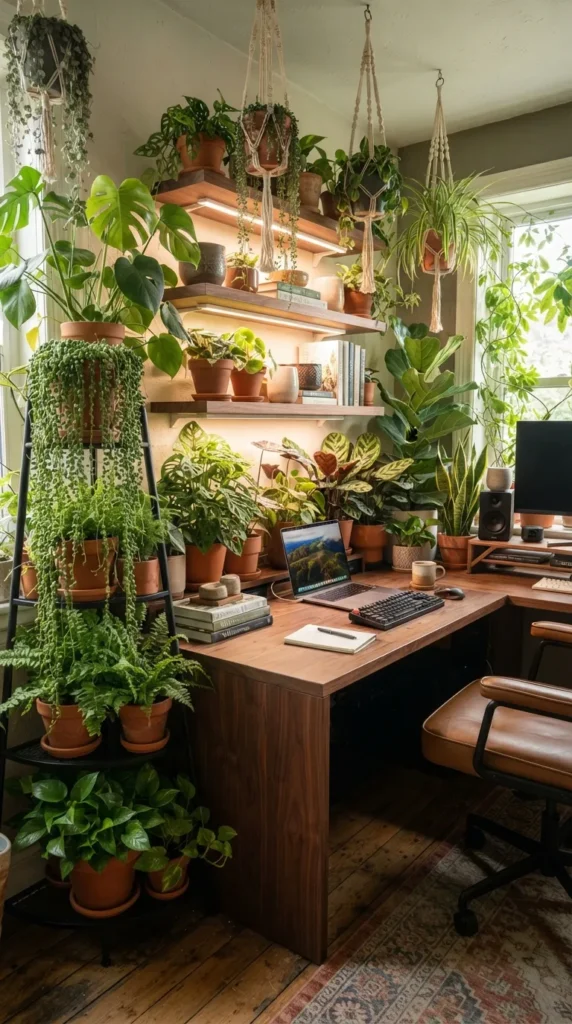
The Urban Jungle desk corner is a dynamic biophilic sanctuary where the desk is integrated into a lush indoor garden.
What This Idea Means
Biophilic design connects human productivity directly with living nature. Surrounding your workstation with vibrant plants reduces stress, cleans the air, and brings dynamic texture to an empty corner.
How to Make It
- Fit a natural wood desk into the corner, leaving 3 inches of space along the wall for a tiered metal plant stand.
- Install two heavy-duty ceiling hooks to suspend hanging macrame planters with Boston ferns or String of Hearts.
- Mount full-spectrum white LED grow lights under the floating shelves to keep plants healthy while providing clean task lighting.
- Use matching ceramic and terracotta pots to create a balanced collection.
- Place a tabletop misting bottle and a mini watering can as decorative accents on a shelf.
Tips and Variations
- Tips: Choose plants that thrive in your room’s specific lighting conditions (e.g., ZZ plants and Snake plants for low light; Monsteras for bright indirect light).
- Variations: Add a living wall panel or moss art frame above the monitor.
Materials Needed
- Solid wood desktop with natural grain
- Tiered corner plant stand
- Macrame rope plant hangers and ceiling hooks
- Full-spectrum grow light bar (warm white)
- Assorted indoor tropical plants
8. Warm Earthy Terracotta & Clay Nook
Introduction
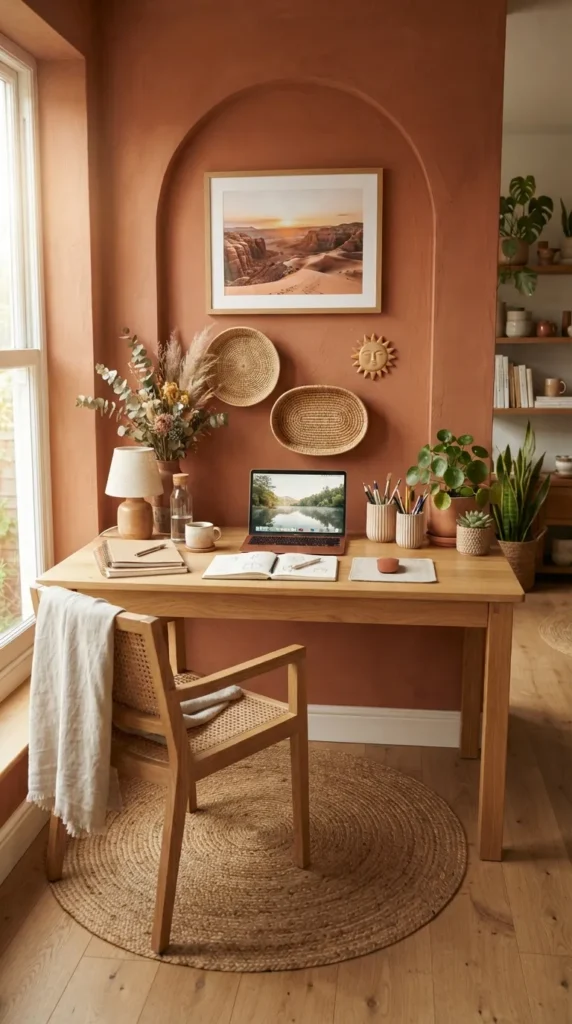
Grounding and sun-drenched, the Terracotta & Clay aesthetic utilizes southwest-inspired earth tones, raw ceramics, warm rust shades, and natural desert textures.
What This Idea Means
This style brings grounded, artisanal warmth to the modern office, replacing sterile whites and grays with clay, ochre, rust, sand, and rough linen.
How to Make It
- Paint a warm terracotta or sun-baked clay color arch directly on the wall behind the desk.
- Position a warm honey-toned wood desk right within the painted arch.
- Style the space with rough, unglazed ceramic pencil holders, ribbed clay mugs, and woven rattan organizers.
- Add framed desert landscape photographs or warm bohemian geometric art prints.
- Use a woven jute runner or sisal rug beneath the desk area to anchor the natural flooring.
Tips and Variations
- Tips: Paint a soft circle or arch on the wall to clearly define the workspace zone without physical walls.
- Variations: Pair terracotta tones with sage green accents to introduce a cool, balancing contrast.
Materials Needed
- Honey oak or teak desk
- Terracotta wall paint for accent arch
- Unglazed ceramic pencil cups and planters
- Woven jute floor rug
- Rattan document baskets
9. Minimalist Monochromatic Black & White Setup
Introduction
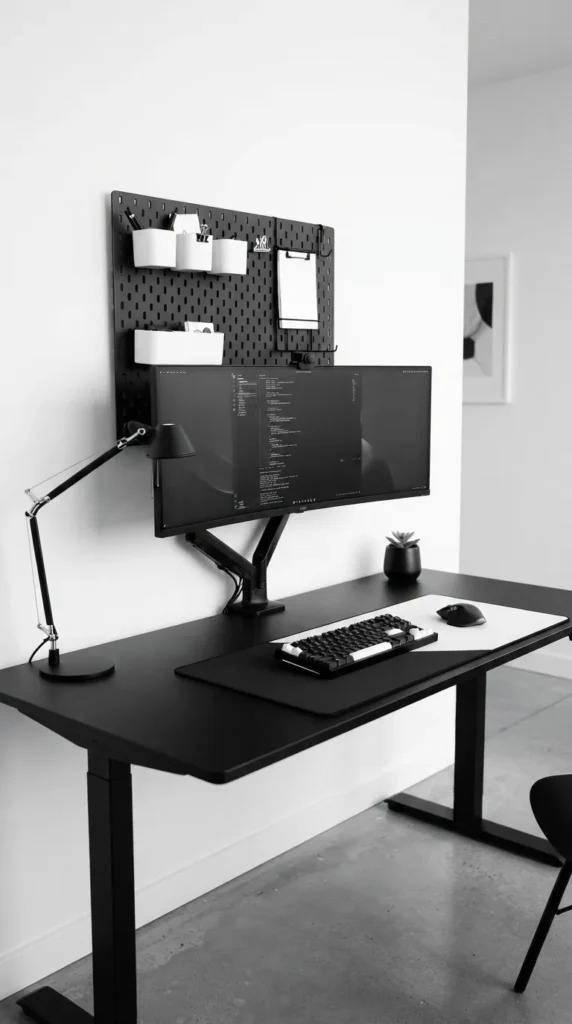
Sleek, orderly, and striking, the Monochromatic Black & White corner setup uses sharp visual contrast to create a distraction-free, professional environment.
What This Idea Means
This aesthetic relies on pure contrast, sharp architectural lines, and zero visual clutter to foster sharp mental focus and precision.
How to Make It
- Set up a crisp matte black desk against a pure white wall.
- Mount a high-contrast black metal pegboard with white storage bins and hanging containers.
- Install an ultrawide monitor using a matte black monitor arm clamped to the rear center of the desk.
- Use a two-tone black and white desk mat paired with a custom monochrome mechanical keyboard and a white ergonomic mouse.
- Add a simple black matte desk lamp with an adjustable neck.
Tips and Variations
- Tips: Use solid black cable sleeves to conceal every single power wire against black desk legs.
- Variations: Invert the palette with a pure white desk against a charcoal accent wall for a brighter, softer finish.
Materials Needed
- Matte black desk
- Clamping monitor arm in matte black
- Two-tone black/white desk pad
- Black metal pegboard with white cups
- White ergonomic mouse and monochrome keyboard
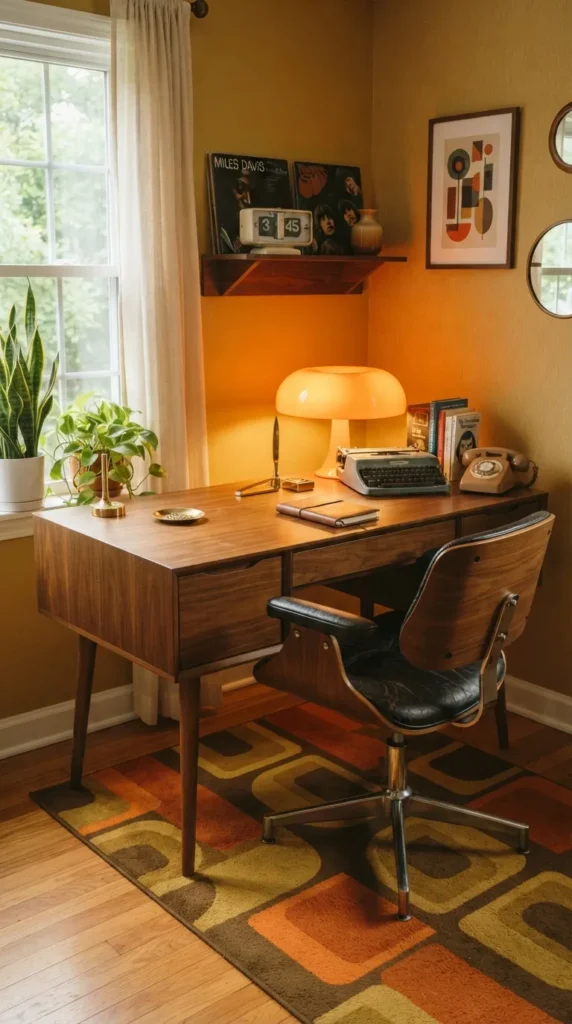
10. Mid-Century Modern Retro Corner
Introduction
The Mid-Century Modern desk corner embraces the iconic interior styles of the 1950s and 60s, featuring tapered dowel legs, warm walnut timbers, organic curves, and vintage color accents.
What This Idea Means
This concept marries timeless retro furniture craftsmanship with modern work tools, creating a sophisticated, tailored study area.
How to Make It
- Anchor the corner with an authentic or reproduction walnut desk featuring tapered legs and integrated shallow drawers.
- Pair it with a classic bentwood or molded fiberglass chair with a black leather seat pad.
- Hang a retro mushroom desk lamp with an orange or mustard yellow acrylic dome shade.
- Mount a slim walnut floating shelf holding vintage audio equipment, an analog alarm clock, and mid-century art prints.
- Use brass desktop accessories, such as a solid brass ruler, tape dispenser, and letter opener.
Tips and Variations
- Tips: Keep wood stains consistent; avoid mixing red-tinted mahogany with yellow-toned oak when styling mid-century spaces.
- Variations: Incorporate a classic vinyl record display shelf along the adjacent wall to complete the retro vibe.
Materials Needed
- Walnut desk with tapered dowel legs
- Molded bentwood office chair
- Retro mushroom lamp with warm amber bulb
- Walnut floating shelf
- Solid brass desk stationery
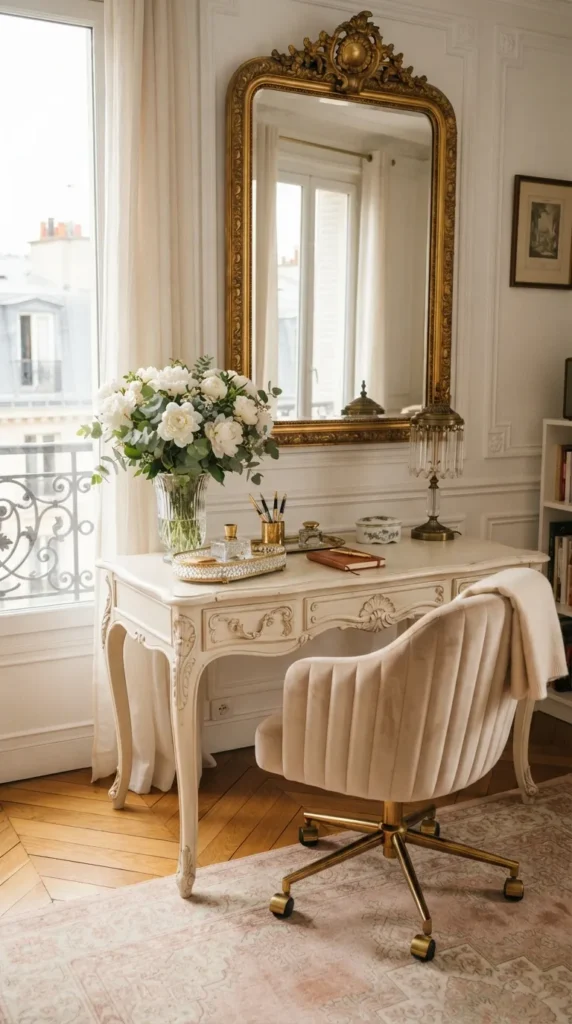
11. Parisian Chic Feminine Workspace
Introduction
Sophisticated, romantic, and elegant, the Parisian Chic desk corner mirrors the architectural grace of classic Haussmannian apartments, featuring ornate mouldings, gilded gold, soft marble, and delicate floral notes.
What This Idea Means
This setup brings timeless European luxury into everyday productivity, using delicate silhouettes, reflective metals, and refined surfaces.
How to Make It
- Install a white desk with ornate carved wooden legs or a slim marble-topped writing table in the corner.
- Mount a tall, vintage gilded gold ornate mirror leaning or hung on the wall above the desk.
- Place a crystal or fluted glass vase filled with fresh white peonies, hydrangeas, or eucalyptus sprigs.
- Use an upholstered velvet channel-tufted swivel chair in soft champagne or blush.
- Add a classic French glass perfume tray to organize high-end fountain pens, luxury candles, and stationery.
Tips and Variations
- Tips: The gilded mirror reflects natural window light across the room, making small corners feel twice as large.
- Variations: Install peel-and-stick picture frame wall mouldings behind the desk to complete the Haussmannian look.
Materials Needed
- White wooden or marble-top desk
- Gilded gold baroque mirror
- Fluted glass flower vase
- Velvet upholstered accent chair
- Mirrored or crystal vanity tray
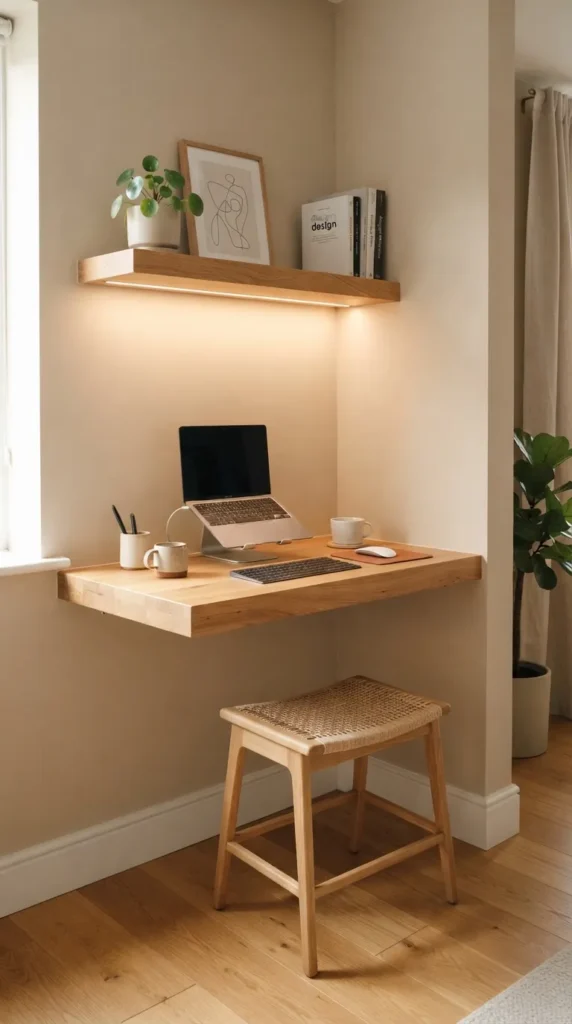
12. Floating Wall-Mounted Micro Nook
Introduction
The Floating Micro Nook is the ultimate space-saving solution for tight rooms. By eliminating floor legs entirely, this setup visually expands the room while providing a functional work surface.
What This Idea Means
This design focuses on suspended geometry and clean open floor space, proving you do not need dedicated floor area to build a beautiful workspace.
How to Make It
- Securely install a thick solid wood floating slab desk into wall studs at standard desk height (29-30 inches from the floor).
- Mount a matching floating shelf with integrated LED light channels 16 inches directly above it.
- Use wireless peripherals (Bluetooth keyboard, mouse, and trackpad) that can be tucked into a slim drawer beneath the slab.
- Use magnetic cable clips hidden on the underside of the shelf and desk to channel power cords directly to the baseboard.
- Pair with a slim, leggy barstool or an airy folding chair that can easily slide away.
Tips and Variations
- Tips: Ensure the floating bracket is rated for at least 150 lbs to support resting arm weight and equipment safely.
- Variations: Choose a wall-mounted fold-down secretary desk that closes completely flush against the wall when work ends.
Materials Needed
- Heavy-duty solid wood floating desk slab
- Heavy-duty steel wall mounting brackets
- Under-shelf recessed LED light strip
- Low-profile wireless keyboard and mouse
- Magnetic under-desk cable management clips
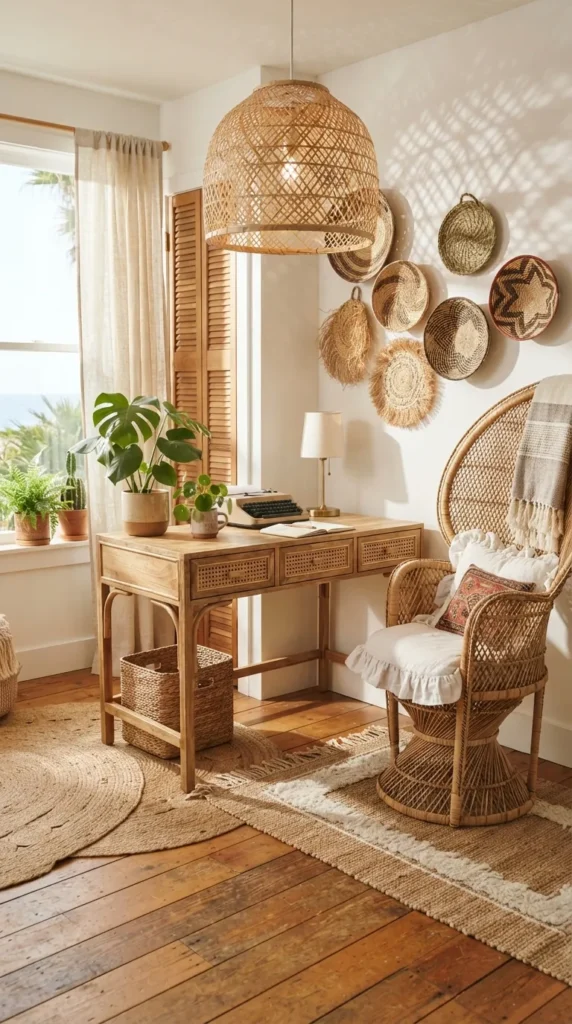
13. Sun-Drenched Bohemian Rattan Haven
Introduction
The Bohemian Rattan desk corner is relaxed, layered, and rich in natural textures. It combines wicker, cane webbing, macrame, woven textiles, and abundant natural sunlight.
What This Idea Means
This aesthetic embraces breezy, global, and handcrafted design, prioritizing relaxed warmth, tactile comfort, and organic imperfections.
How to Make It
- Place a desk featuring woven cane drawer fronts directly beside a sunny corner window.
- Pair it with a natural rattan peacock chair or an open-weave wicker dining chair with a soft linen cushion.
- Hang a woven bamboo or rattan pendant light shade overhead to cast intricate patterned shadows at night.
- Decorate the walls with woven sweetgrass baskets in varying sizes and earthy patterns.
- Add a woven macrame coaster, a ceramic water carafe, and an assortment of dried palms in a stoneware floor urn.
Tips and Variations
- Tips: Layer rugs; place a smaller round woven jute rug over a neutral low-pile wool rug.
- Variations: Add a cane-panel pinboard to hang travel photographs and inspiration swatches.
Materials Needed
- Cane-front wooden writing desk
- Rattan accent chair with linen seat pad
- Woven bamboo pendant lampshade
- Wall-hanging woven grass baskets
- Woven macrame desk mats and coasters
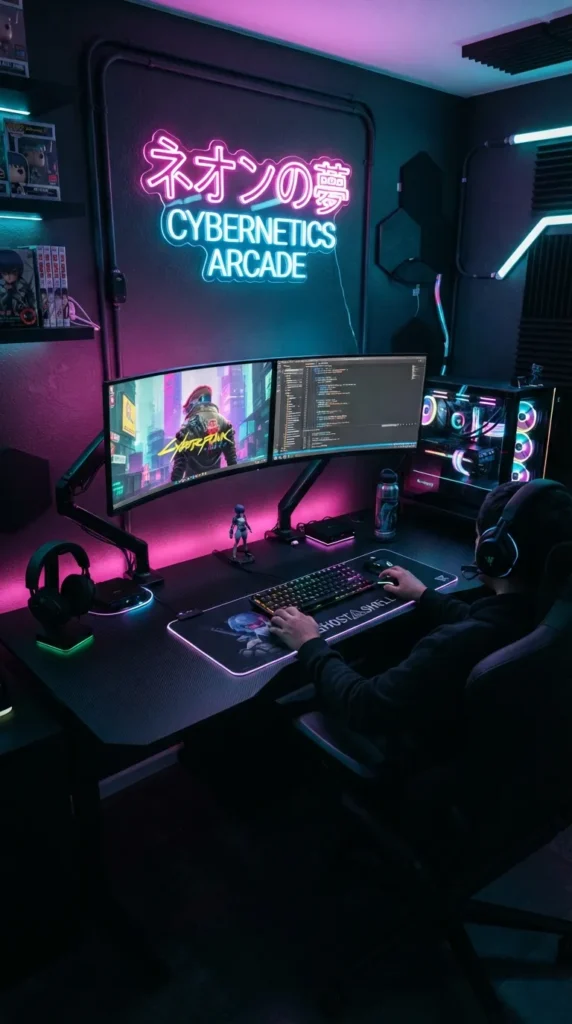
14. Neon Cyberpunk & Synthwave Station
Introduction
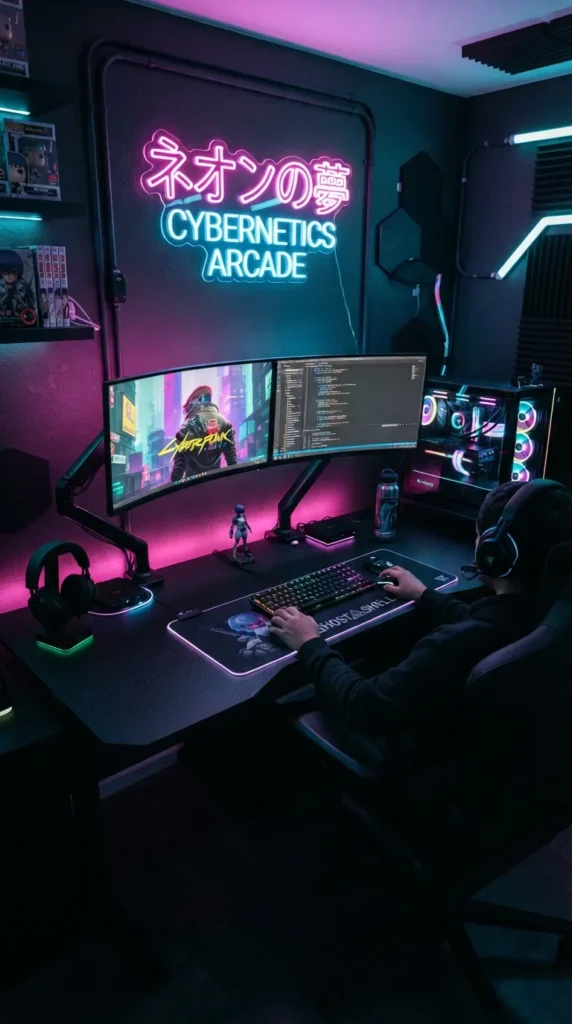
Dynamic, moody, and futuristic, the Neon Cyberpunk corner draws inspiration from retro-futurism, arcade aesthetics, and high-tech gaming culture, using deep blacks and vibrant neon lights.
What This Idea Means
This setup is a creative powerhouse for nighttime work and gaming, utilizing deep ambient shadows illuminated by dual-tone neon lighting (such as magenta and cyan).
How to Make It
- Position a matte black carbon-fiber or powder-coated steel desk into a dark-painted corner.
- Mount addressable RGB diffused LED light strips along the back perimeter of the desk to wash the corner walls in vivid color gradients.
- Hang a custom neon LED sign (such as Japanese kanji, an abstract polygon, or a retro wave sunset) on the primary wall.
- Set up dual monitors or a curved gaming monitor on heavy-duty black pneumatic arms.
- Add a custom illuminated mechanical keyboard with vibrant artisan keycaps and a large matching gaming pad.
Tips and Variations
- Tips: Use diffused silicone light channels for LED strips so individual LED hot-spots are smoothed into seamless light bars.
- Variations: Switch color profiles between Synthwave (Pink/Cyan) and Deep Cyberpunk (Amber/Purple) depending on your workflow.
Materials Needed
- Matte black steel desk
- Diffused addressable RGB silicone light strips
- Custom acrylic neon sign
- Pneumatic monitor desk mount
- Extended gaming desk pad
15. Warm Wood & Brass Executive Study
Introduction
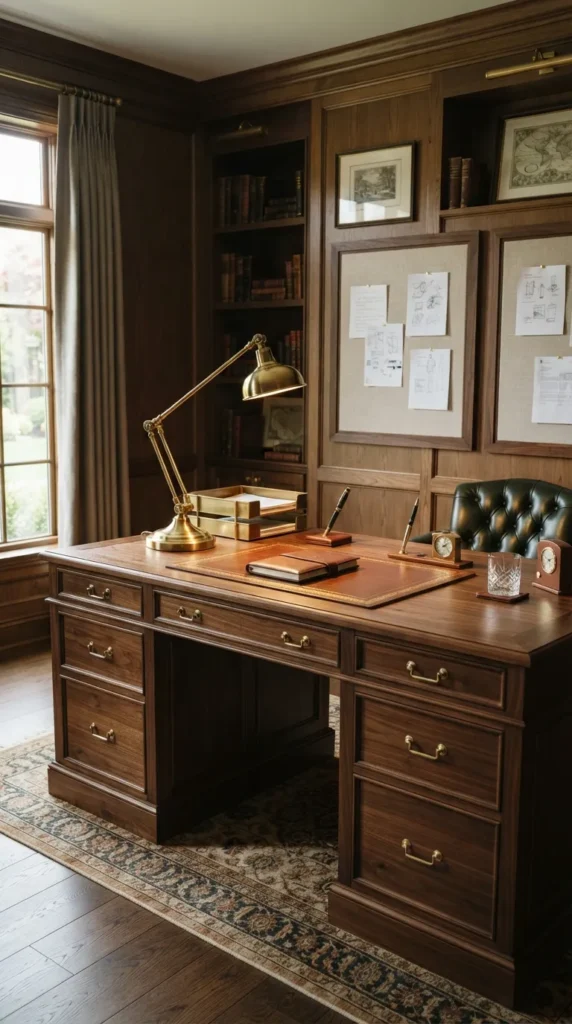
The Wood & Brass Executive corner delivers timeless professional polish in a compact footprint. It merges rich walnut or cherry wood with gleaming polished brass hardware and tailored organizational tools.
What This Idea Means
This setup exudes traditional competence, high craftsmanship, and classic executive authority, scaled thoughtfully to fit small corner spaces.
How to Make It
- Install a rich solid walnut writing desk featuring integrated drawers with solid brushed brass handles.
- Hang a substantial walnut-framed corkboard wrapped in heavy natural linen above the workspace.
- Add a solid brass architectural desk lamp with a weighted base and warm white illumination.
- Use a heavy bronze or brass document tray for incoming and outgoing paper storage.
- Style the desktop with a leather desk blotter embossed with gold leaf foil edging.
Tips and Variations
- Tips: Polish brass accessories with microfiber cloths to prevent tarnishing and fingerprint marks.
- Variations: Add an executive leather desk chair with walnut wood armrests to complete the coordinated luxury look.
Materials Needed
- Solid walnut desk with brass hardware
- Linen-wrapped cork bulletin board
- Solid brushed brass task lamp
- Leather desk pad with gold detailing
- Brass pen holder and paper tray

16. Coastal California Breezy Workspace
Introduction
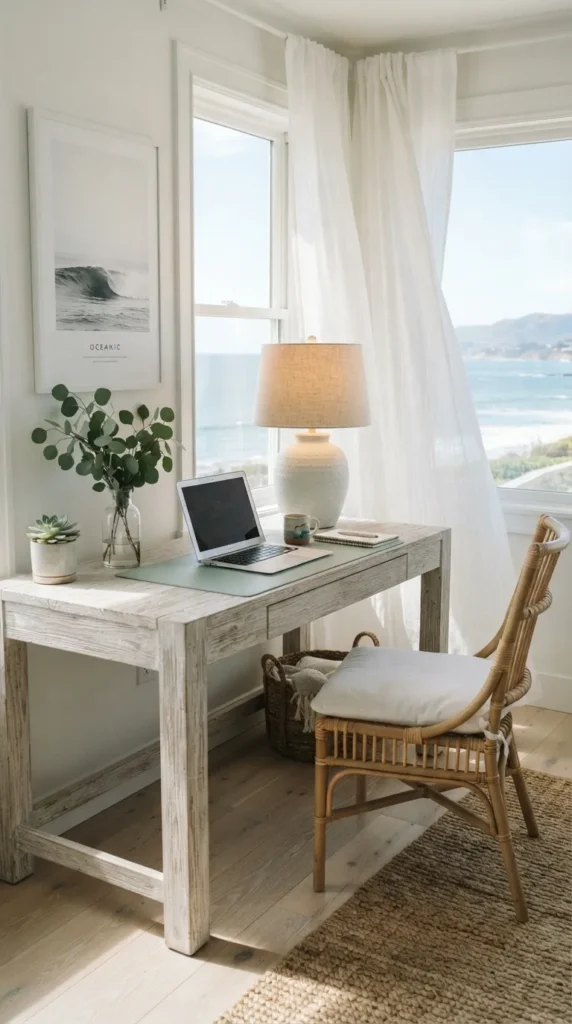
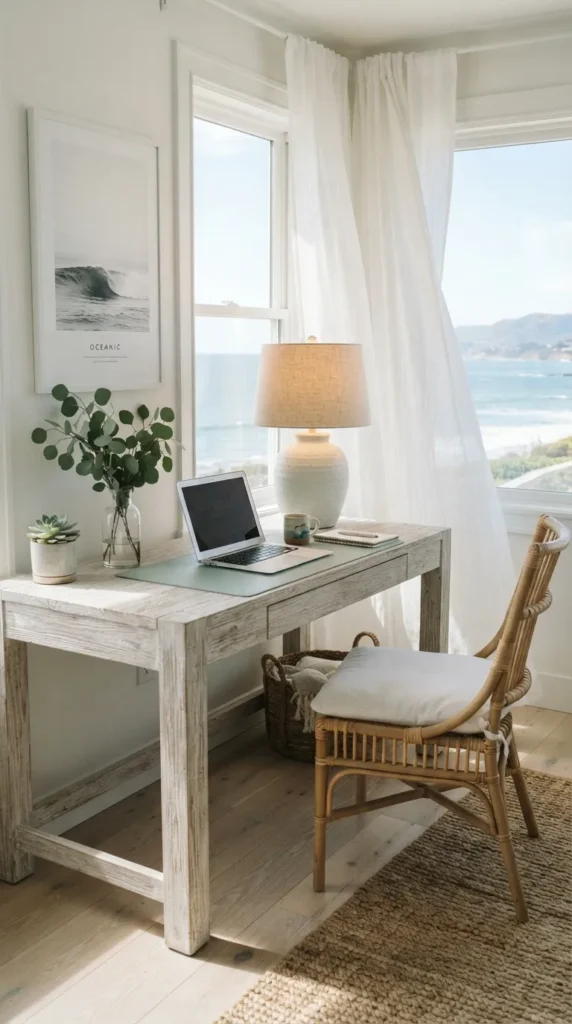
Light, airy, and refreshing, the Coastal California corner captures the casual sophistication of coastal living. It leans on whitewashed timbers, pale seafoam hues, bleached woods, and sheer curtains.
What This Idea Means
This style brings the relaxed calm of coastal oceans into your workspace, using pale wood, ocean blue tones, and bright open light to keep your mind refreshed.
How to Make It
- Use a bleached oak, driftwood, or distressed whitewashed wood desk.
- Position the desk beside a window dressed in flowing, sheer white linen curtains that flutter with the breeze.
- Add a ceramic desk lamp in a distressed ivory or sea-salt white finish with a linen shade.
- Mount framed coastal photographic prints featuring ocean swells, sand dunes, or sea salt textures.
- Place a white ceramic vessel filled with dried bleached sea oats or bunny tails on a corner riser.
Tips and Variations
- Tips: Keep the palette bright and crisp; use Benjamin Moore Simply White or similar warm whites on the surrounding walls.
- Variations: Add a light blue or seafoam linen desk mat to introduce subtle ocean color.
Materials Needed
- Bleached oak or whitewashed desk
- Sheer flowing linen curtains
- Textured white ceramic table lamp
- Framed ocean art prints in light wood frames
- Dried coastal sea oats in stoneware vase
17. Multi-Monitor Productivity Command Center
Introduction
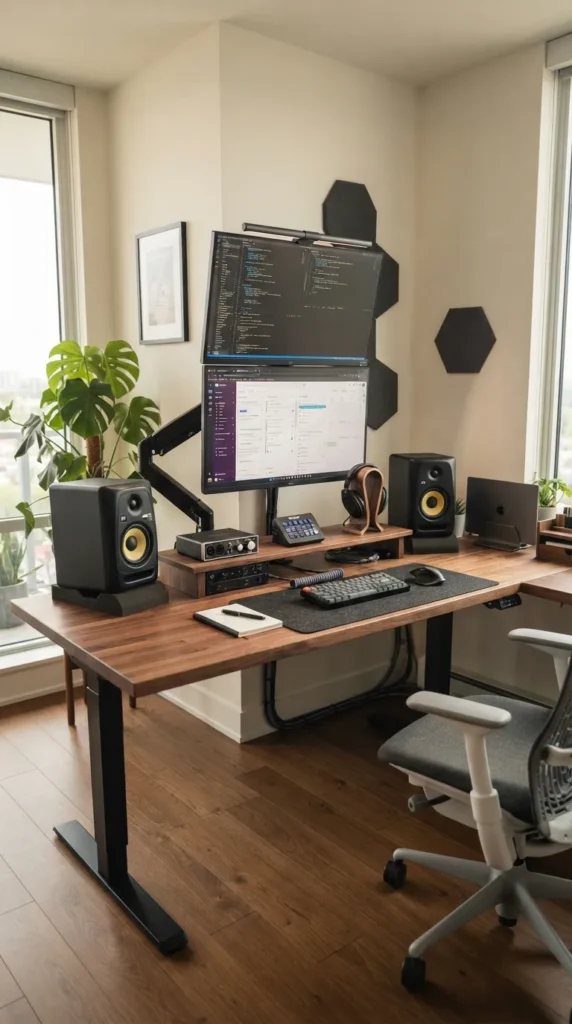
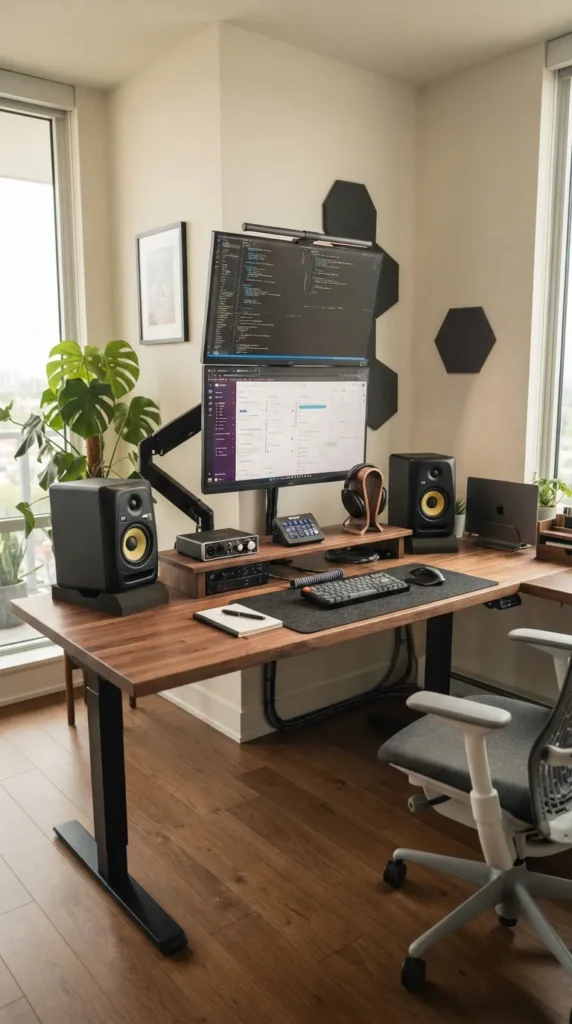
The Command Center is engineered for power users, developers, financial analysts, and editors. It balances heavy tech hardware with sleek ergonomics, unified cable management, and clean aesthetic lines.
What This Idea Means
This setup proves that high-performance tech does not have to look messy or industrial. It seamlessly integrates screens, audio hardware, and input devices into a sculpted, harmonious corner.
How to Make It
- Use a spacious corner L-shaped solid wood desk (such as butcher-block walnut or oak) resting on a heavy-duty motorized standing desk frame.
- Mount dual monitors horizontally or stacked vertically using a heavy-duty dual monitor arm.
- Place a solid wood desk riser shelf beneath the monitors to elevate the screens while creating storage space for an audio interface and hard drives underneath.
- Mount studio monitor speakers on isolation foam wedges at ear level on both sides of the main display.
- Install a clamp-on aluminum monitor light bar on top of the primary screen for glare-free, focused task lighting.
Tips and Variations
- Tips: Run all monitor, peripheral, and audio cables through braided mesh cable sleeves directly down the monitor arm.
- Variations: Add an ultra-wide curved screen with an articulated webcam mount for seamless video conferencing.
Materials Needed
- L-shaped corner standing desk
- Heavy-duty dual monitor arm
- Solid wood desktop monitor riser shelf
- Screen-mounted LED monitor light bar
- Braided cable concealment sleeves
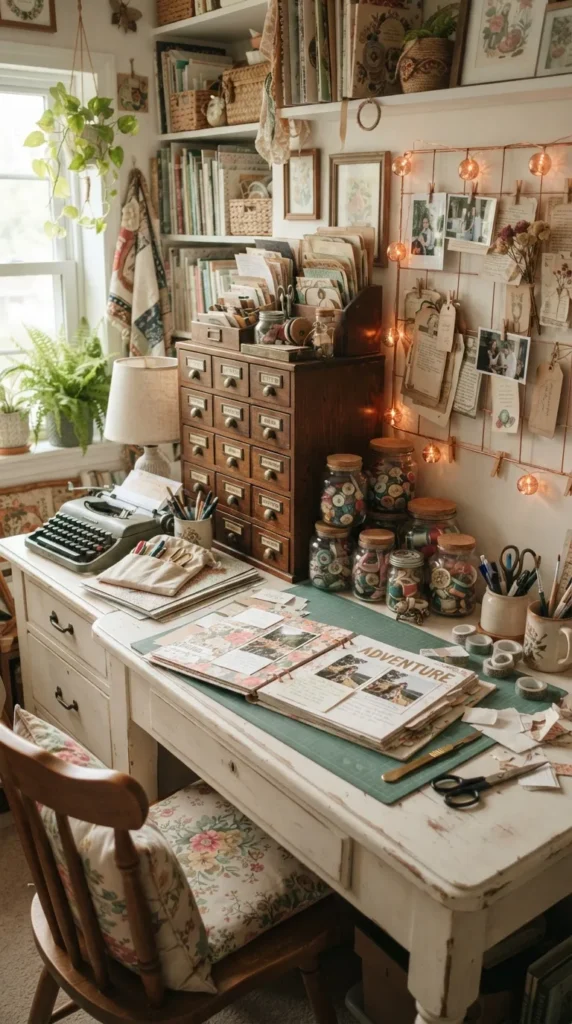
18. Vintage Whimsical Scrapbooker’s Craft Corner
Introduction
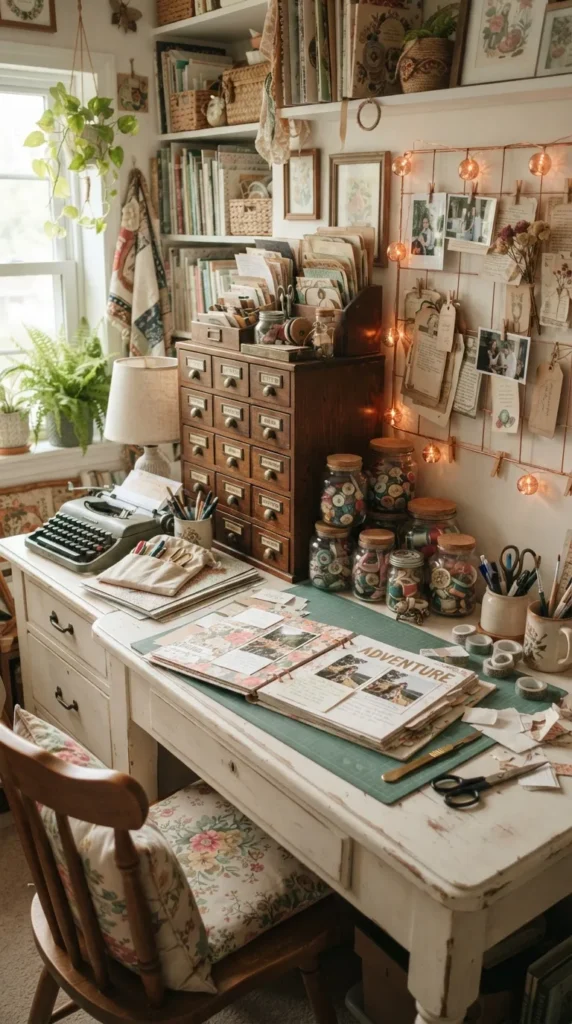
Charming, tactile, and expressive, the Whimsical Scrapbooker’s corner is built for crafters, journal enthusiasts, and illustrators who celebrate hands-on creativity and tactile tools.
What This Idea Means
This aesthetic celebrates organized abundance. Craft tools, washi tapes, calligraphy inks, and rubber stamps are displayed openly as authentic art pieces.
How to Make It
- Use a sturdy, antique farmhouse-style white or distressed wood desk with a spacious top.
- Mount a vintage multi-drawer wooden spice cabinet or apothecary drawer unit on the back of the desk for craft storage.
- Set up a rotating desktop organizer filled with vintage scissors, fountain pens, paintbrushes, and wooden stamps.
- Hang a string of warm fairy lights or micro-copper wire LEDs across a grid wire board displaying postcards and washi swatches.
- Use patterned vintage tins, glass apothecary jars, and woven baskets to sort ribbons and ephemera.
Tips and Variations
- Tips: Protect the desk wood with a clear, self-healing craft cutting mat in a muted cream or green tone.
- Variations: Add a dedicated swing-arm magnifying task lamp for detailed craft and illustration work.
Materials Needed
- Antique or farmhouse writing desk
- Wooden apothecary mini drawer unit
- Clear or muted self-healing cutting mat
- Rotating wooden carousel desk organizer
- Warm copper wire fairy lights
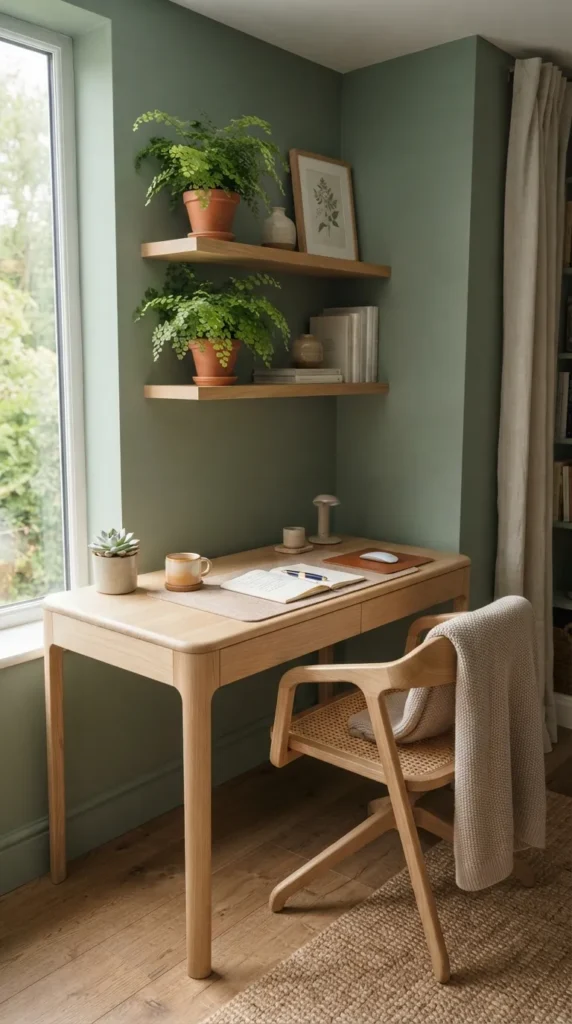
19. Sage Green & Natural Oak Calm Sanctuary
Introduction
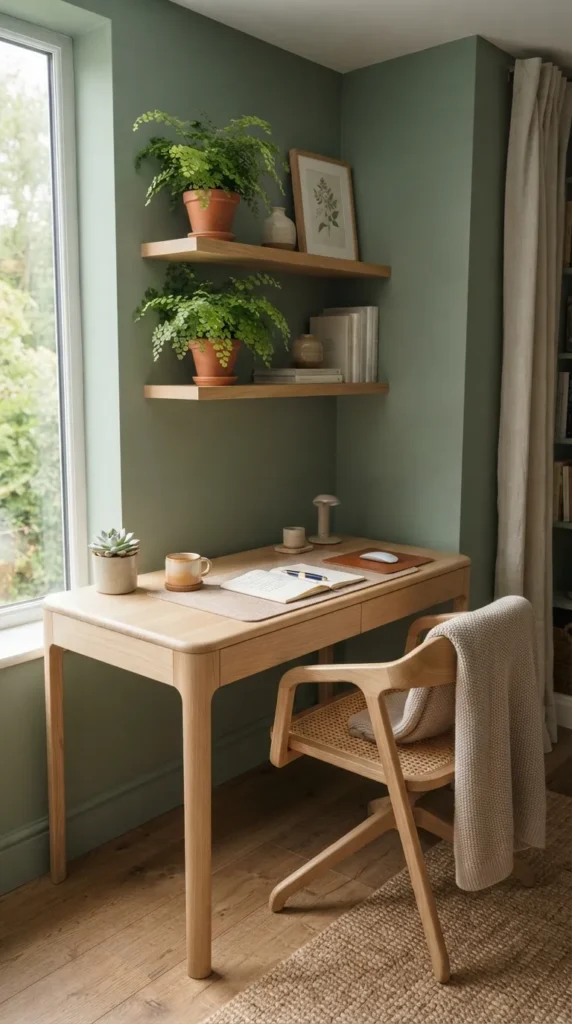
Sage green and light oak create a grounding, deeply restorative color combination. This corner design uses biophilic wall colors and light timbers to promote sustained mental focus.
What This Idea Means
Sage green has scientifically proven calming properties for the eyes, while light oak adds warm structure. Together, they create a balanced, organic workspace.
How to Make It
- Paint the desk corner walls in a muted, velvety matte sage green.
- Position a light white-oak writing desk with rounded corners neatly against the wall.
- Mount two light oak floating shelves above the desk, styling them with small potted ferns and ceramic ornaments.
- Use a felt desk pad in a soft heather grey or oatmeal shade.
- Add a matte white or soft sage task lamp alongside an oak wood monitor riser.
Tips and Variations
- Tips: Use matte finishes for all painted surfaces; glossy paint can reflect distracting glare from computer screens.
- Variations: Paint only the lower half of the wall sage green with white on top, separating them with a thin oak wood trim.
Materials Needed
- Light white-oak desk
- Matte sage green wall paint
- Natural oak floating shelves
- Heather oatmeal wool felt desk pad
- Matte white task light
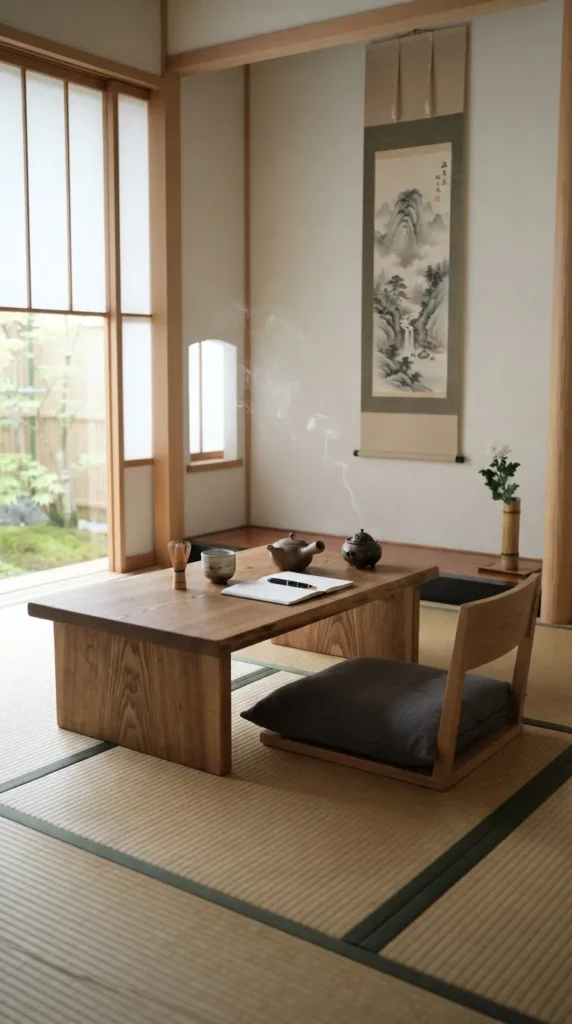
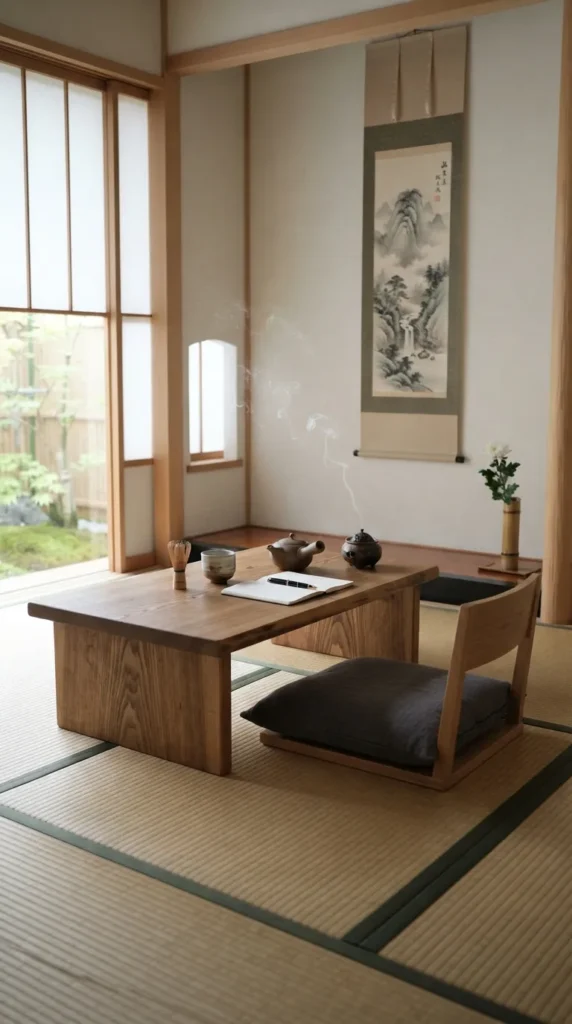
20. Modern Japanese Zen Tatami Corner
Introduction
The Zen Tatami corner is an ultra-low-profile or floor-seated workspace inspired by traditional Japanese washitsu rooms. It promotes mindful focus and physical groundedness.
What This Idea Means
By working closer to the floor, this aesthetic opens up vertical ceiling height, making even tiny rooms feel airy, uncrowded, and serene.
How to Make It
- Lay high-quality woven igusa rush tatami mats across the corner floor to define the work zone.
- Install a low-profile, solid Hinoki cypress or Paulownia wood floor desk (zataku).
- Use an ergonomic Japanese floor chair (zaisu) with a buckwheat hull lumbar pillow.
- Place a low ceramic incense burner or stone tea light holder on a corner slate tray.
- Keep the walls completely bare except for a single vertical calligraphy scroll or sumi-e ink landscape painting.
Tips and Variations
- Tips: Tatami mats produce a subtle, naturally calming rush grass aroma that enhances the serene workspace environment.
- Variations: If floor sitting is uncomfortable, adapt this aesthetic to standard height using a low-profile Japanese joinery wood desk and a minimalist wooden chair.
Materials Needed
- Woven natural tatami floor mat
- Low wooden zataku floor desk
- Ergonomic zaisu floor chair with cushion
- Ceramic incense holder with natural sandalwood incense
- Traditional Japanese hanging wall scroll